'Ignorant or Lying?': John Cleese blasts Speaker Mike Johnson over Trump's Iran peace deal

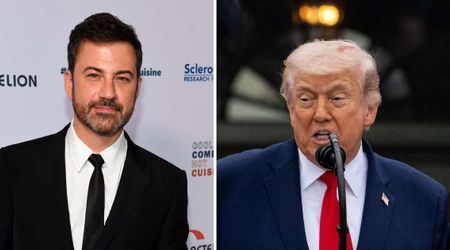
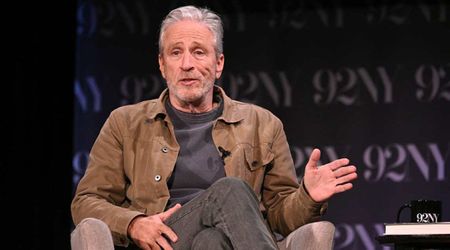
Actor John Cleese called out House Speaker Mike Johnson (R-LA) on X, demanding to know if the speaker was "appallingly ignorant or lying" after Johnson credited President Donald Trump for forcing Iran to the negotiating table. The Monty Python star is a known critic of the Trump administration, having censured Johnson last week following his comments supporting the lawmakers' right to trade stocks.
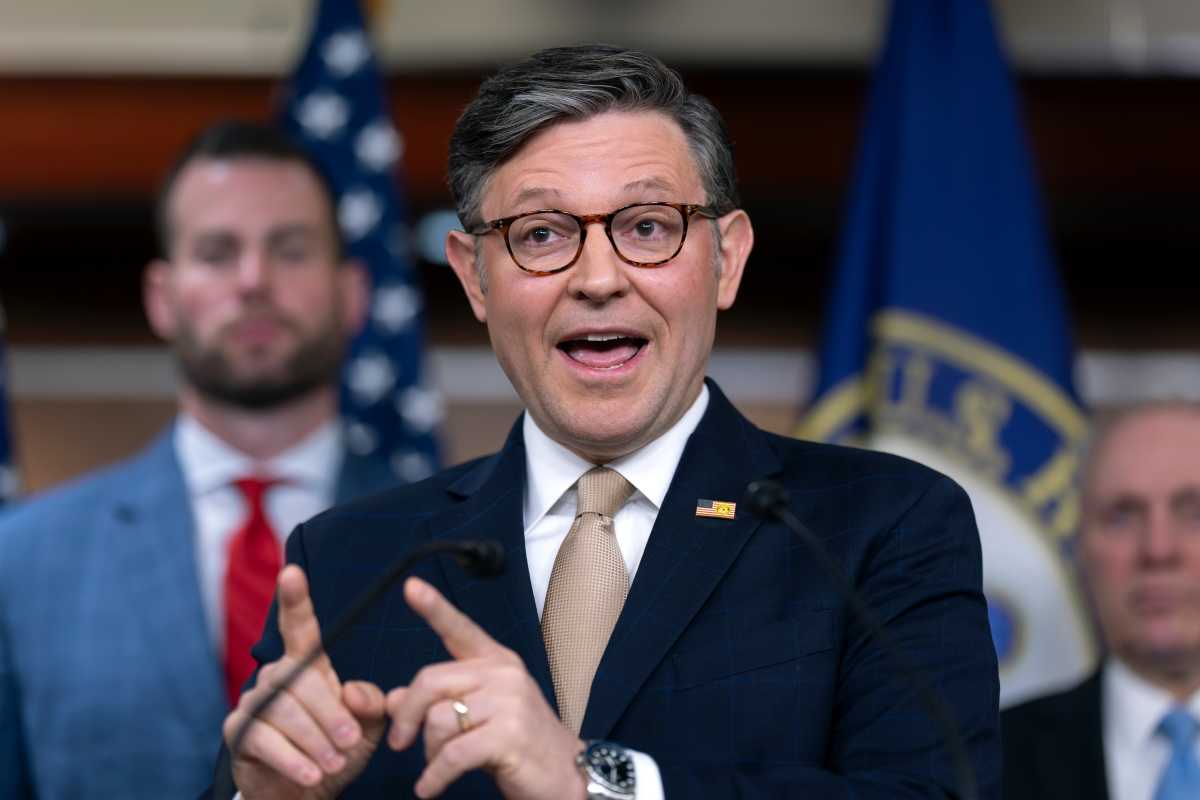
The Louisiana Republican had come out in glowing praise of Trump, while denouncing Iran as the "world's largest state sponsor of terrorism," after he announced that the U.S. had "largely finalised" a peace deal with Iran after a three-month-long war, which began with military strikes across Tehran, resulting in the death of Iran's Supreme Leader, Ali Khamenei. However, people were quick to remind Johnson that former U.S. President Barack Obama and other world leaders negotiated with Iran via the platform's Community Notes.
President Trump is the ONLY one who could have gotten Iran — the world’s largest state sponsor of terrorism — to the negotiating table.
— Speaker Mike Johnson (@SpeakerJohnson) May 24, 2026
We are greatly encouraged to learn a PEACE DEAL in Iran is underway — and look forward to learning more about the specifics.
Under President…
Cleese's post appears to be questioning Johnson's apparent hyping of President Trump's negotiating skills when there is no clarity on the deal's specifics. The spat comes at a time when the United States is in the middle of tense negotiations with Iran for securing a peace deal, which would include Tehran abandoning uranium enrichment and reopening the critical Strait of Hormuz.
I am deeply concerned about what we are hearing about an Iran “deal,” being pushed by some voices in the administration.
— Ted Cruz (@tedcruz) May 24, 2026
President Trump’s decision to strike Iran was the most consequential decision of his second term. He was right to do so, and we achieved extraordinary…
A peace deal was announced after a Saturday call involving the U.S., Saudi Arabia, the United Arab Emirates, Qatar, Jordan, Türkiye, Bahrain, and Pakistan. Trump said that "final aspects and details" are currently under discussion, and an announcement is "due soon." The President posted another update on Monday, revealing that the negotiations were "proceeding nicely" and that the U.S. will enter either a "great deal" or "no deal at all".
The deal reportedly involves a 60-day ceasefire extension, reopening the Strait of Hormuz, and a plan for further negotiations over Iran's nuclear program. There were reports that Iran had agreed to ship out its enriched uranium, which would have been a major victory for Trump, who tore up Obama's nuclear deal with Iran that constrained its nuclear program. Iran denied these claims when asked by Reuters, reiterating that it had not agreed to hand over its highly enriched uranium stockpile. Tehran has also adopted a more cautious approach, clarifying that the deal is "not imminent" despite progress, according to Iran's Foreign Ministry spokesman Esmail Baqai.
President Trump’s most recent proposal requiring expansion of the Abraham Accords as part of a negotiated settlement to the Iran conflict is simply brilliant and would result in the most significant change in the Middle East in thousands of years.
— Lindsey Graham (@LindseyGrahamSC) May 25, 2026
With Saudi Arabia and others…
Many critics, including those from within the GOP ranks, have slammed the deal. Former Republican Congressman Adam Kinzinger argued that the emerging peace deal grants Iran "more privileges" than before the war. Rick Wilson, a political consultant and co-founder of the Lincoln Project, claimed the concessions mentioned in the agreement seem like a "total capitulation to Iran," rendering the war effort meaningless.