Supreme Court strikes down Trump's global tariffs in landmark 6-3 ruling
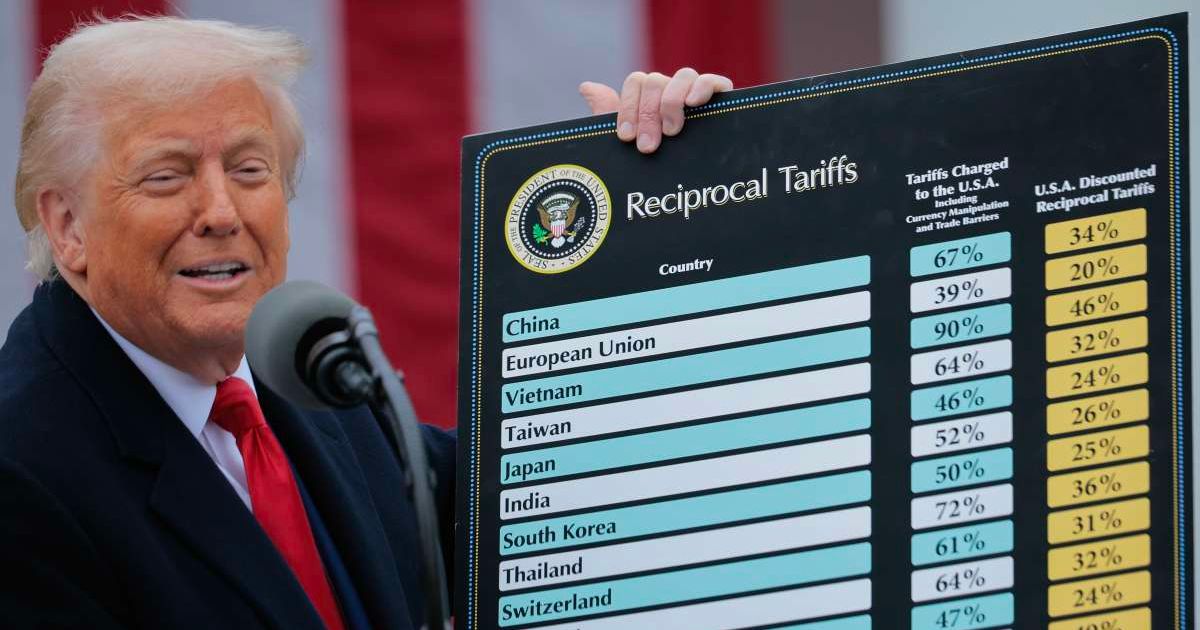
In a massive setback for President Donald Trump on Friday, the Supreme Court struck down his administration's global tariffs, stating that they were implemented unlawfully. In a 6–3 ruling, the Court stated that the President cannot use "emergency powers" to create new taxes. Trump had used a 1977 law called the IEEPA (International Emergency Economic Powers Act) to bypass Congress, arguing that because he declared a national emergency regarding the trade deficit and fentanyl, he could "regulate" imports by taxing them.
US Supreme Court is essentially saying Trump wrongly used a national emergency law to put tarrif & they don’t consider US trade deficit as a national emergency.
— Save Invest Repeat 📈 (@InvestRepeat) February 20, 2026
Basically, if US wants to put tarrif it has to come from US Congress.
Though I think Trump won’t have enough…
Chief Justice John Roberts, writing for the majority, however, ruled that the word "regulate" in the law does not mean "tax” and the President cannot impose tariffs under the IEEPA without Congressional approval. If the government were allowed to prevail with its tariffs agenda, Roberts said, it "would replace the longstanding executive-legislative collaboration over trade policy with unchecked Presidential policymaking". "Accordingly, the President must 'point to clear congressional authorization' to justify his extraordinary assertion of the power to impose tariffs. He cannot."
Today’s 6-3 ruling by the Supreme Court is a Victory for the American People and a Win for the Separation of Powers enshrined in the Constitution of the United States.
— Mike Pence (@Mike_Pence) February 20, 2026
In Learning Resources, Inc. v. Trump, our Supreme Court has reaffirmed that the Constitution grants Congress -…
What this means for Trump's Tariffs
It should be noted that the Supreme Court was hearing a case challenging the President's decision to impose tariffs, citing the IEEPA, and the ruling does not affect all of the U.S.A.'s tariffs currently in place. The 'Liberation Day' tariffs, which Trump imposed by declaring a national emergency over the trade deficit to levy a 10% baseline tax and higher "reciprocal" duties on trading partners, and the 'Drug Trafficking' tariffs that targeted imports from China, Canada, and Mexico under the guise of a border security emergency, are now legally dead.
No Supreme Court decision can undo the massive damage that Trump's chaotic tariffs have caused.
— Elizabeth Warren (@SenWarren) February 20, 2026
The American people paid for these tariffs and the American people should get their money back. https://t.co/I78bV2jJUH
However, tariffs imposed under Section 232 of the Trade Expansion Act of 1962 and Section 301 of the Trade Act of 1974, which include the heavy duties on steel, aluminum, and Chinese technology, will not be affected by the ruling. These remain in place because they are grounded in specific statutes that authorize the executive branch to act on formal investigations by the Commerce Department or the U.S. Trade Representative regarding national security or unfair trade practices.
No one can deny that the President’s use of tariffs has brought in billions of dollars and created immense leverage for America’s trade strategy and for securing strong, reciprocal America-first trade agreements with countries that had been taking advantage of American workers…
— Speaker Mike Johnson (@SpeakerJohnson) February 20, 2026
President Trump, who has often described his tariff policies as one of his greatest achievements, called the majority decision "a disgrace" when he was notified about the development during his morning meeting with several governors, the Associated Press reported, citing an anonymous source with direct knowledge of the President's reaction. "Today I will sign an order to impose a 10% global tariff under Section 122, over and above our normal tariffs already being charged, and we're also initiating several Section 301 and other investigations to protect our country from unfair trading practices of other countries and companies," Trump later told reporters.