'No one sails from Strait of Hormuz without permission of U.S. Navy’: Defense Secretary Pete Hegseth
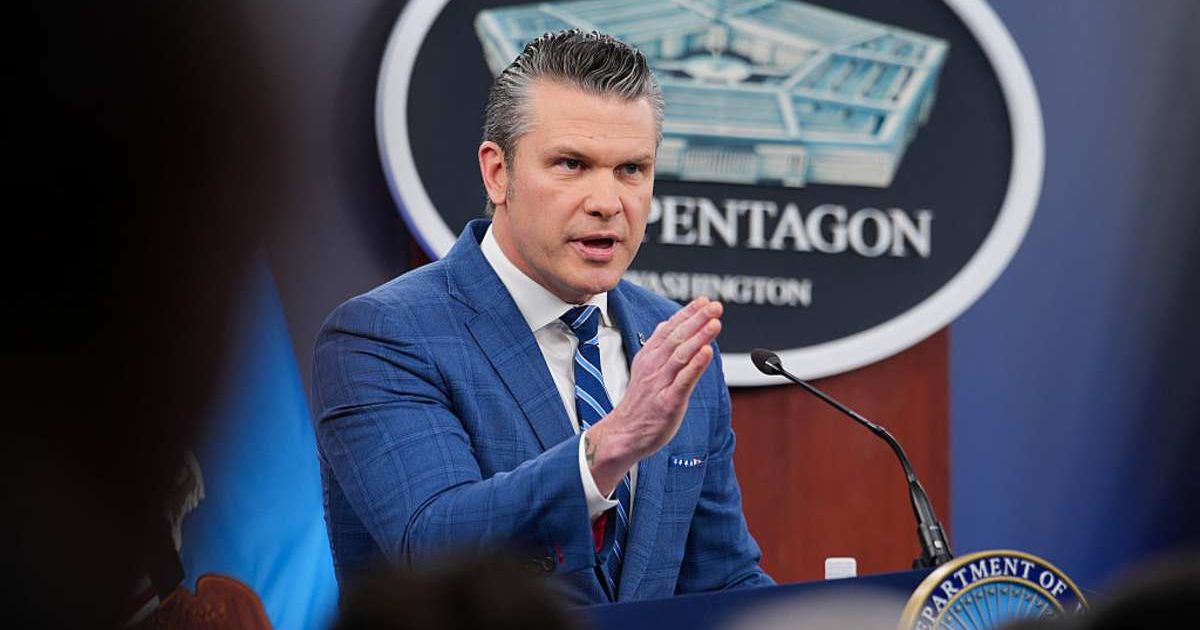
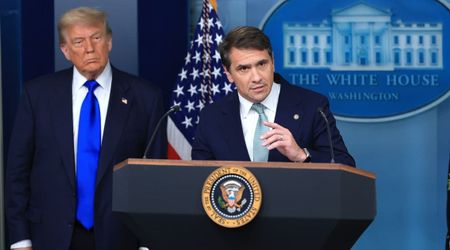
U.S. Defense Secretary Pete Hegseth said that no ship would sail from the Strait of Hormuz without the “permission of the U.S. Navy.” The American blockade of the crucial trading route led to the Iranians closing the strait after opening it for a brief period of time. Hegseth also claimed that the U.S. Navy had turned back 34 ships looking to transit through the area, and seized Iranian ships in the Indo-Pacific region that had left the area before the U.S. blockade was in place.
"Every ship that the U.S. believes meets our criteria, either Iranian ships or those to and from Iranian ports, has been turned around,” Hegseth said. He said that non-Iranian vessels were “allowed to transit” and that many had done so “overnight.” The Defense Secretary announced that a second aircraft carrier would be joining the blockade soon.
BREAKING: "As usual, there's a lot of false information out there."
— Fox News (@FoxNews) April 24, 2026
"Every ship that the U.S. believes meets our criteria, either Iranian ships or to and from Iranian ports, has been turned around."
"Our blockade is growing and going global. America's military is unmatched."… pic.twitter.com/GVDhY1PhHp
“America's military is unmatched,” he added. “Projecting power, denying passage to adversaries, and protecting our interests at the time and place of our choosing. No one sails from the Strait of Hormuz to anywhere in the world without the permission of the United States Navy." While several countries have condemned the U.S. aggression in West Asia, Hegseth believes that America’s mission was like a gift to the entire world.
“It's a bold and dangerous mission. A gift to the world. Historic. Courtesy of a bold and historic president," he said. The Secretary of Defense heaped further praise on the POTUS, stating that previous administrations had looked the other way as Tehran has been waging war on Washington for more than four decades. "President Trump is the only president with the guts and moral clarity to finally do something about it. I see it every day behind closed doors. President Trump's fortitude is unshakeable, and his mission is crystal clear," he said.
NOW: Secretary of War Pete Hegseth says the U.S. is tightening pressure on Iran — warning the regime can either abandon nuclear ambitions or face “unrelenting” economic pressure.
— Fox News (@FoxNews) April 24, 2026
He adds the blockade will last “as long as it takes,” saying the clock is “not on their side.” pic.twitter.com/pgQzUP3m64
Hegseth also claimed that Washington was in no rush to make the best possible deal with Tehran. “Iran knows that they still have an open window to choose wisely. As we said previously, choose wisely at the negotiating table. All they have to do is abandon a nuclear weapon in meaningful and verifiable ways,” he said. The Secretary of Defense also said that the U.S. was ready to blockade the Strait of Hormuz for “as long as it takes,” to pressure Tehran into a deal. Currently, the USS Ford, Bush, and Lincoln are all operating in the Middle East for the first time in decades.
3 U.S. aircraft carriers. 1 region.
— Fox News (@FoxNews) April 24, 2026
CENTCOM confirms the USS Ford, Bush, and Lincoln are all operating in the Middle East — the first time in decades.
The U.S. has dedicated more than 200 aircraft and 15,000 sailors and Marines to patrolling the Strait of Hormuz and the broader… pic.twitter.com/rMh4lwFwOf
While nothing was signed the last time the American and Iranian delegations met, a second meeting in Islamabad is due. Iran’s Foreign Minister Seyed Abbas Araghchi posted on X that he would be visiting the Pakistani capital, but did not mention potentially having peace talks with the American delegation. “The purpose of my visits is to closely coordinate with our partners on bilateral matters and consult on regional developments. Our neighbors are our priority,” he wrote. On Thursday, President Donald Trump claimed that Tehran had agreed to open the Strait of Hormuz, but he put the U.S. blockade into effect to prevent Iran from making $500 million a day.