Landmark SCOTUS ruling weakens Voting Rights Act, provides GOP strategic advantage in redistricting
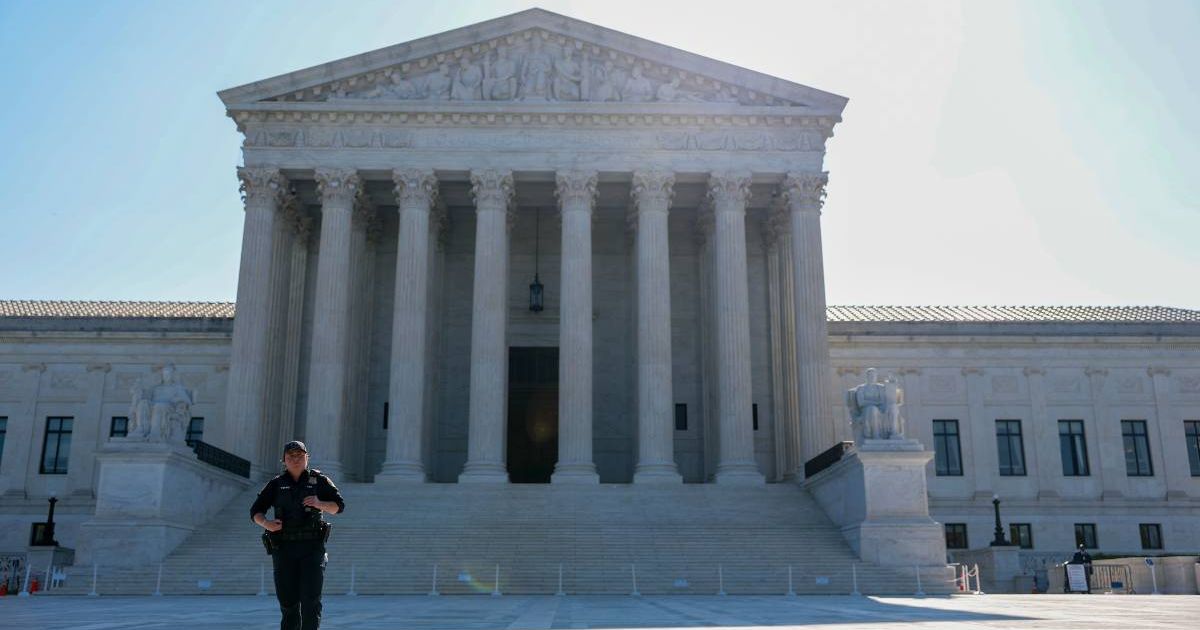
The Supreme Court, in a 6–3 decision on Wednesday, struck down a Louisiana congressional map in a move that, as per legal analysts, threatens to weaken the Voting Rights Act. The ruling also comes as a major win for the Republican Party.
The SCOTUS ruling in the Louisiana v. Callais case stops the state from using a map with a second majority-Black district, undoing a lower court's effort to boost minority representation in the region. The decision signals a major change in how the judiciary views racial gerrymandering, shifting from protecting minority voting groups to a stricter colorblind approach.
🚨 In a 6-3 vote, the Supreme Court strikes down Louisiana's new congressional map that added a second majority-black district, holding that it constitutes a racial gerrymander.
— SCOTUS Wire (@scotus_wire) April 29, 2026
The Court narrows its previous interpretation of the Voting Rights Act. pic.twitter.com/rqy3POxauJ
Justice Samuel Alito, writing for the conservative majority, said the map was an "unconstitutional racial gerrymander." The majority decided that race was the main factor in drawing the district lines and that the state did not give a strong enough constitutional reason. In a 36-page opinion, Alito explained that "the Constitution almost never permits the Federal Government or a State to discriminate on the basis of race."
Today the Supreme Court issued a decision in Louisiana v. Callais, a case that addresses the constitutional limits on the states’ use of race in federal electoral maps. 🧵
— Federalist Society (@FedSoc) April 29, 2026
This is a big change from past decisions, like the Allen v. Milligan case, where the Court supported minority representation by ruling that Alabama's 2021 congressional redistricting map likely diluted the voting power of Black residents.
The latest ruling sets a much tougher standard for states under the Voting Rights Act, making it harder for people to ask for majority-minority districts unless they can prove lawmakers' intent to a very high degree. While the conservative ruling is unlikely to directly impact the upcoming midterm elections, it does have a wider political effect.
Massive advantage for GOP legislatures
By removing the second majority-Black district, the Court has made sure that five out of six congressional seats in Louisiana remain secure for Republican incumbents. Moreover, the ruling threatens to dilute provisions under Section 2 of the Voting Rights Act of 1965 that prohibit any "standard, practice, or procedure" that results in the denial or abridgment of the right to vote on account of race, color, or membership in a language minority group.
As per a report by the Associated Press, citing election law expert Nicholas Stephanopoulos, nearly 70 of the 435 congressional districts are protected by Section 2. "The consequences are likely to be far-reaching and grave. Today's decision renders Section 2 all but a dead letter," Justice Elena Kagan, joined by Justices Sonia Sotomayor and Ketanji Brown Jackson, wrote in a strong dissent.
Alabama currently has a direct appeal pending before the Supreme Court over its court-imposed congressional map that adds a second majority-black seat.
— SCOTUS Wire (@scotus_wire) April 29, 2026
The Court has taken no action on it since November, likely waiting for a ruling in Callais. pic.twitter.com/GvadQJvmDd
This ruling gives Republican-led legislatures in the South a new way to defend their redistricting plans. By focusing on partisan intent instead of racial impact, the conservative majority has shifted the focus of election law from voter outcomes to what politicians decide.
"Right now, this only applies to Louisiana, but states can challenge their congressional maps and, with precedent, pick up Republican seats. If states are aggressive, we could see a healthy majority in the House perpetually," Trump's former campaign manager, Brad Parscale, said, as per the New York Post.
I welcome the Supreme Court's correct decision. The left has spent decades hiding their racial obsession behind the banner of civil rights. Today, that game ends.
— Rep. Burgess Owens (@RepBurgessOwens) April 29, 2026
Racial gerrymandering is not protection. It is the left's plantation politics repackaged with a law degree. The…
Notably, the ruling comes at a time Florida Republicans, led by Governor Ron DeSantis, have submitted a proposed redrawing of the state's congressional lines, aiming to give GOP lawmakers a chance to pick up as many as four seats. Democrats have sought to delay the debate — a request Republicans have refused.
Democrats denounce SCOTUS ruling
Democrats, including former President Barack Obama, have reacted sharply to the Supreme Court decision. "Today's Supreme Court decision effectively guts a key pillar of the Voting Rights Act, freeing state legislatures to gerrymander legislative districts to systematically dilute and weaken the voting power of racial minorities — so long as they do it under the guise of "partisanship" rather than explicit "racial bias,"" Obama wrote in a post on X. The former president, however, expressed optimism, saying that "such setbacks can be overcome."
Today’s Supreme Court decision effectively guts a key pillar of the Voting Rights Act, freeing state legislatures to gerrymander legislative districts to systematically dilute and weaken the voting power of racial minorities - so long as they do it under the guise of…
— Barack Obama (@BarackObama) April 29, 2026
Senator Chris Van Hollen called it a "shameful day" in a post on X. "Today, the right-wing Supreme Court supermajority finished what it started over a decade ago – in Justice Kagan's words, "a judicial project to destroy the Voting Rights Act," Senator Sheldon Whitehouse said. Senator Chuck Schumer accused the Supreme Court of "turning its back on one of the most sacred promises in American democracy—the promise that every voice counts."