'Arsonist trying to collect on insurance policy': Markey slams Trump's Canada tariff threat over wildfires
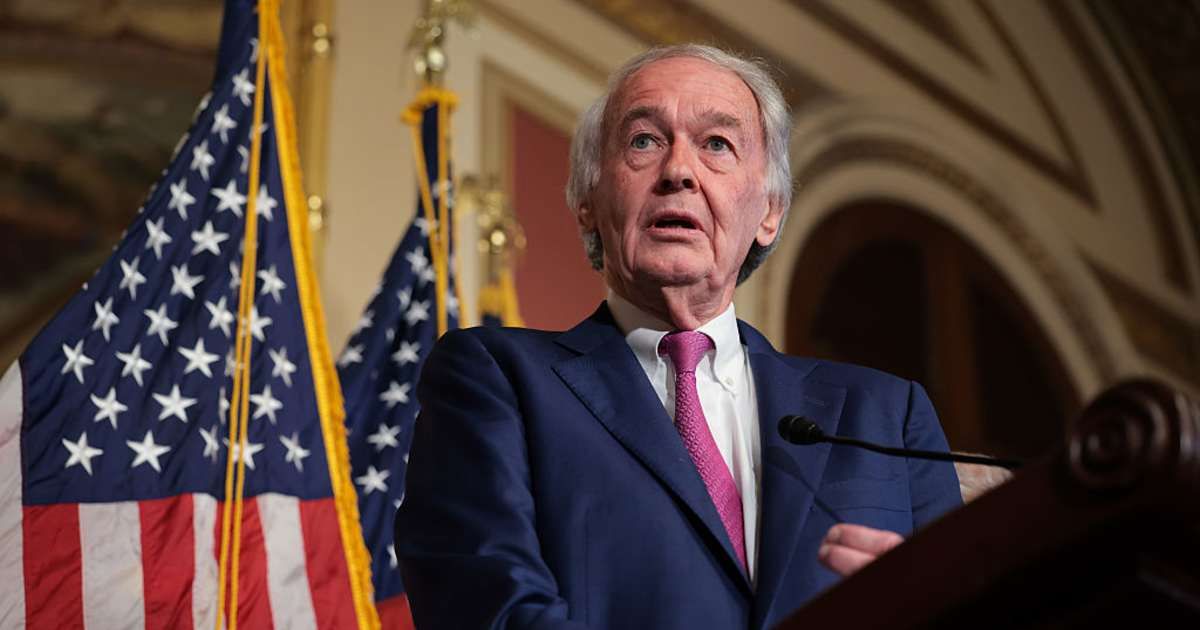
President Donald Trump showed no sign of easing tensions with Canada after imposing a 50 percent tariff on goods ranging from dairy products to clothing. Sen. Edward Markey (D-MA) wasn't having it, making clear what he thinks America's approach should be instead. "Trump putting a 50 percent tariff on Canada in response to the wildfire smoke is like an arsonist trying to collect on the insurance policy after the house burns down. Tariffs don't put out wildfires; firefighters do. If Canada is asking for our help, we should send it," he wrote on X.
Canada has maintained pervasive, non-reciprocal trade practices that have disadvantaged American farmers, manufacturers, and workers.
— United States Trade Representative (@USTradeRep) July 20, 2026
For example: All but two Canadian provinces and territories have halted the purchase, distribution, or retailing of U.S. alcoholic beverages and… pic.twitter.com/a4tOWOzVX4
Trump had previously threatened to slap Canada with tariffs over its alleged mismanagement of wildfires. However, it's not clear these tariffs are a direct response to that, given that the White House said they are in response to Canada's discriminatory treatment of American products such as dairy, alcoholic beverages, and automobiles. Canadian Prime Minister Mark Carney slammed the decision, calling it another violation of CUSMA, the trilateral trade pact between the U.S., Mexico, and Canada.
My statement on the United States administration’s intention to impose new tariffs on Canadian goods: pic.twitter.com/wl8JtbQjyC
— Mark Carney (@MarkJCarney) July 20, 2026
The 80-year-old senator, a member of the Environment and Public Works Committee, also sent a letter to Environmental Protection Agency (EPA) Administrator Lee Zeldin and Department of the Interior (DOI) Secretary Doug Burgum, urging the agencies to respond to any requests for immediate fire assistance and to develop a coordinated plan with Ottawa to manage the increasingly frequent and severe cross-border wildfire smoke events.
Yet another absurd and harmful escalation in Trump's idiotic trade war with our close friend and ally. Trump's tariffs continue to hurt Americans AND Canadians alike.
— Senator Patty Murray (@PattyMurray) July 20, 2026
Congress must vote to BLOCK these tariffs.
Canada and the USA should stand together. https://t.co/YmjikRJ6p6
“Despite this ongoing emergency and a growing pattern of large-scale U.S.-Canada wildfire smoke events in recent years, there has been little public coordinated activity from the administration to combat this crisis and no indication that the federal government is working to improve its ability to address future cross-border wildfire smoke incidents. In fact, the central federal message so far has been President Trump’s announcement that he will add the cost of wildfire pollution to the tariffs that he wishes to assess on Canada," he said in the letter.
Trump's new 50% tariffs on a long list of Canadian imports will hit American consumers hard. Not only will they increase our overall cost of living, but they will specifically increase the cost of home construction, making new homes even less affordable than they are now.
— Peter Schiff (@PeterSchiff) July 21, 2026
Markey also urged Zeldin and Burgum to examine the bilateral wildland fire management and air quality infrastructure between Canada and the United States, as a way to improve mutual assistance in an era of severe wildfires. This, he said, should include a formal update of the Canada-United States Air Quality Agreement, which has served as an effective cooperative instrument in managing transboundary air pollution.
QUESTION: Could Trump go one day without making things worse?
— Amy Klobuchar (@amyklobuchar) July 21, 2026
HEADLINE: Trump to Impose 50% Tariff on Canadian Goods
BOTTOM LINE: This is just bad, especially for Minnesota when Canada is our #1 trading partner & Trump’s tariff taxes have already hit us hard.
"Like the climate crisis, the wildfire crisis is a shared crisis. It does not respect national boundaries, and our response cannot stop at our border. We must have a federal government that
responds to crises effectively and quickly, invests in institutions that can match the evolving scale of climate change and its impacts, and works together with our neighbors – not against them– to ensure our mutual wellbeing," he concluded.