Zohran Mamdani revives sweeping 'Streets Master Plan' — but how will he pay for it?
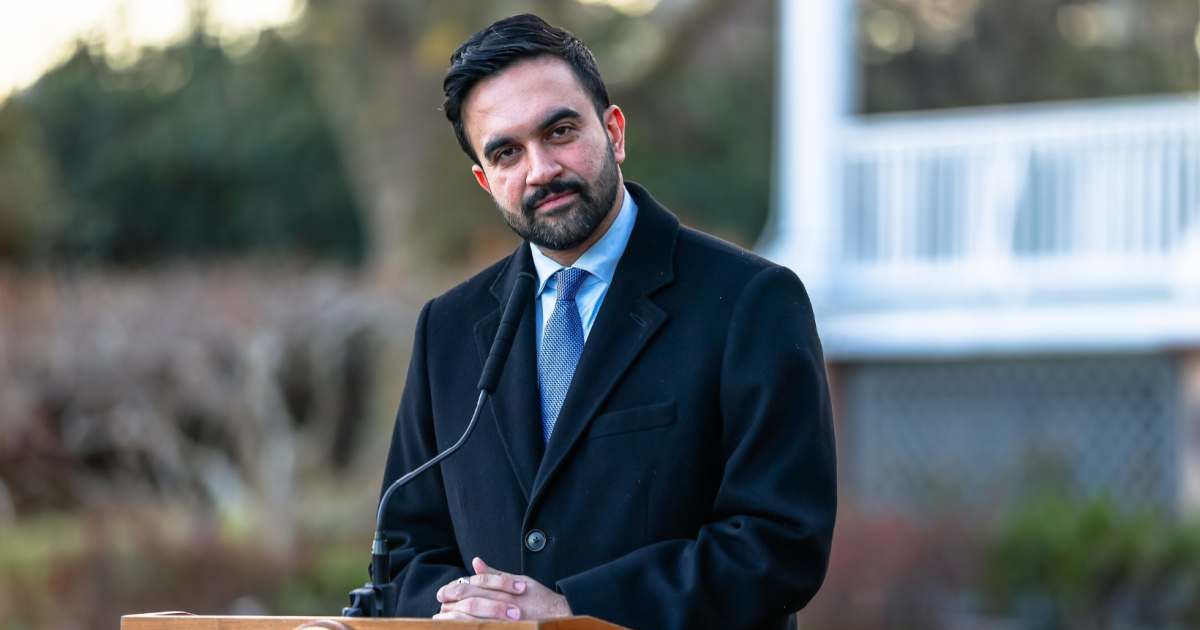
In his first major transit announcement as New York Mayor, Zohran Mamdani officially launched a series of infrastructure projects on February 13 as part of his "First 100 Days" agenda. And in line with his promises, he announced the revival of the Streets Master Plan, a 2019 legislation that mandates the city to prioritize pedestrians, cyclists, and transit riders over private vehicle traffic through a five-year binding blueprint. But why does it matter, and more importantly, can the city really fund it? Let's explore.
The Adams Administration stopped the Streets Master Plan. We’re bringing it back.
— Mayor Zohran Kwame Mamdani (@NYCMayor) February 14, 2026
We’re kicking off four bold NYC street projects: faster buses on the Bronx’s busiest route, a continuous protected bike route all the way from Sunset Park to DUMBO, protected bike lanes around 10… pic.twitter.com/G8l9nyygyB
Before we delve into what Mamdani promised, it should be noted that the word "reviving" here is essentially a pledge to finally meet the legal benchmarks that the previous administration failed to meet. Legally known as Local Law 195 of 2019, the NYC Streets Master Plan required the Department of Transportation (DOT) to transform New York City's 6,300 miles of streets under five goals:
- 250 Miles of Protected Bike Lanes: At least 50 miles must be installed annually.
- 150 Miles of Protected Bus Lanes: At least 30 miles must be installed annually. These must be physically protected or camera-enforced.
- 2,000 Intersection Redesigns: Aimed at slowing down turning vehicles and shortening crossing distances for pedestrians (at least 400 per year)
- 2,500 Accessible Pedestrian Signals (APS): Improving safety for blind and low-vision New Yorkers, and,
- 1 Million Square Feet of Pedestrian Space: Creating new plazas and "shared streets" within the first two years.
Inbox: NYC is launching “a major new visioning process to reimagine Fifth Ave.—from Bryant Park at 42nd St. to Central Park at 59th St.—as a safer, less congested, pedestrian-centered boulevard that also prioritizes cyclists, mass transit, & the public realm,” mayor’s office says pic.twitter.com/QtcKHvxaF7
— Andrew Giambrone (@AndrewGiambrone) December 18, 2022
Under former Mayor Eric Adams, the city faced significant criticism for falling behind these requirements. For example, in 2024, the city installed only 22.8 miles of the required 50 miles of protected bike lanes. Mamdani's latest announcement specifically targets projects that were stalled under the previous government. These include, but aren't limited to the transformation of Fordham Road in the Bronx with offset bus lanes, the restoration of the "full road diet" for McGuinness Boulevard in Greenpoint, the completion of the "missing link" protected bike lane on Ashland Place in Fort Greene, and the implementation of a comprehensive cycling network across Midwood, Flatbush, and East Flatbush.
Mayor Mamdani has characterized the stopping of these projects as a failure of leadership where "well-placed phone calls" were prioritized over the needs of working-class commuters, and expressed his intention to tax New York's richest to fund his transit agenda. Mamdani's central proposal involves working with the state legislature to implement a 2% personal income tax increase for New Yorkers earning over $1 million annually. Additionally, he plans to hike the corporate tax rate from 7.25% to 11.5% to match neighboring New Jersey.
Mamdani's administration is also aggressively pursuing roughly $800 million in outstanding fines owed by landlords for building code violations. The New York Mayor has expressed that he views this "beefed-up" enforcement not only as a way to protect tenants but as a direct revenue stream to reimburse the MTA for lost fare revenue.