US orders partial evacuation of Beirut embassy amid rising tensions with Iran
Amid rising tensions with Iran, the U.S. State Department, on Monday, ordered all non-emergency personnel at the American Embassy in the Lebanese capital, Beirut, to leave with their families. The development, days after President Donald Trump's "bad things happen" warning, has raised concerns across the Middle East that a military confrontation may be imminent. The BBC quoted a senior State Department official as saying that this is a temporary measure "intended to ensure the safety of our personnel while maintaining our ability to operate and assist US citizens."
Travel Advisory: Updated to reflect ordered departure of non-emergency U.S. government personnel and family members of government personnel on February 23.
— U.S. Embassy Beirut (@usembassybeirut) February 23, 2026
On February 23 the Department of State ordered the departure of non-emergency U.S. government personnel and family members… pic.twitter.com/vfxdlAnXOf
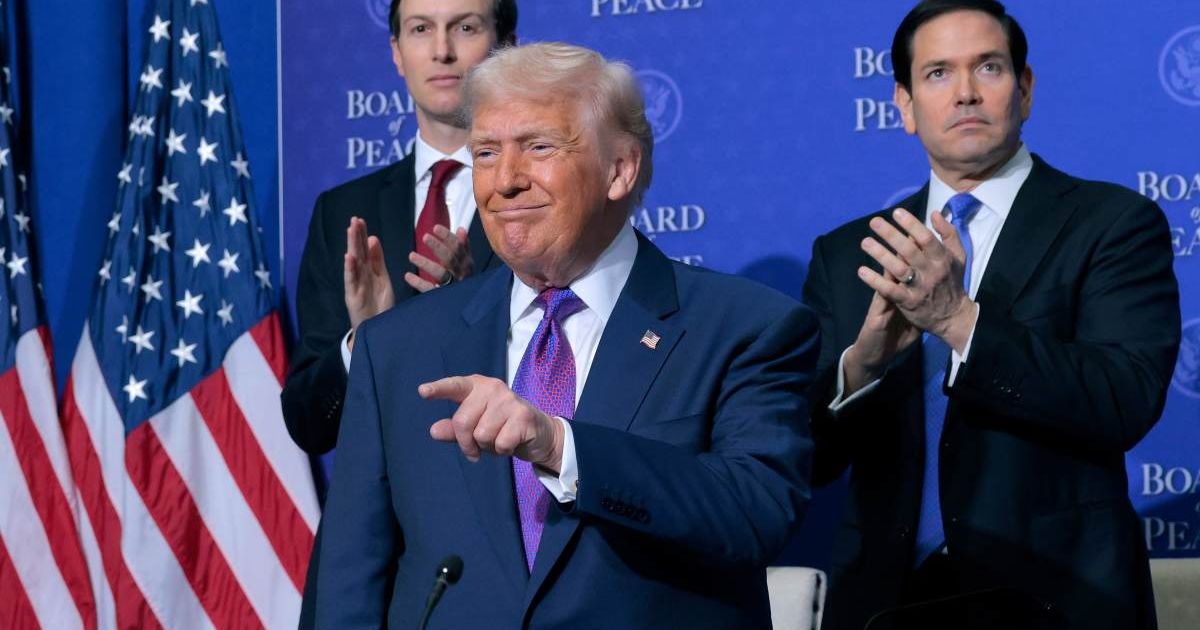
While Iranian Foreign Minister Abbas Araghchi has said that a "diplomatic solution" is within reach after talks with the U.S. last week, President Trump has not ruled out the possibility of a military strike. During the inaugural 'Board of Peace' meeting last week, the President had said that Iran had to make a "meaningful deal" or "bad things happen." Last Friday, Trump was asked if he was considering military action, to which he said, "I guess I can say I am considering."
🚨 President Trump: If Iran does not make a deal, "bad things would happen" to thempic.twitter.com/CXo0eREm3J
— Raylan Givens (@JewishWarrior13) February 2, 2026
Two separate reports—by The Washington Post and The New York Times—last week claimed that while the President has not ruled out military action, he hasn’t taken any firm decision yet. The U.S. has significantly increased its military presence in the Gulf. Apart from two aircraft carriers—the USS Gerald Ford and USS Abraham Lincoln—now stationed in nearby waters, over 50 additional fighter jets, including F-35s and F-22s, have been deployed to the Middle East.
And there you have it: Witkoff says that Trump is frustrated/curious as to why Iran has not "capitulated" yet, despite massive US military threats.
— Trita Parsi (@tparsi) February 22, 2026
This is the core of the matter: As I have written extensively, Israel and pro-Israeli voices have sold Trump a narrative that… pic.twitter.com/HkQlBJ6fqY
Aragachi, who met U.S. Special Envoy Steve Witkoff and Jared Kushner for informal talks in Geneva last week, said that an agreement had been reached on "general guiding principles" that could lead to a further meeting to discuss its nuclear programme. Speaking to MS Now, he said, "I have been in this business in the past 20 years and negotiated with different parties. I know that a deal is achievable."
They are lying. They are desperate for an excuse to start another war. We were told in no uncertain terms that Trump obliterated Iran’s nuclear program. In June. Now his son-in-law and his financier buddy tell us they are a “week away” from having nuclear bomb material. Both are… pic.twitter.com/eBBsqrWJ1L
— Fred Wellman (@FPWellman) February 23, 2026
However, the U.S. recalling its embassy staff is widely being viewed as a bellwether for military action, as a similar drawdown occurred in June 2025, just days before the U.S. and Israel conducted joint strikes on Iranian enrichment facilities. Iran, too, has not ruled out the possibility of military action, threatening the U.S. with retaliatory action if Washington strikes its facilities. Aragachi told MS Now that Iran is prepared for diplomacy and negotiation "as much as we are prepared for war."