Trump's 'Board of Peace' fund sits empty months after launch: Report
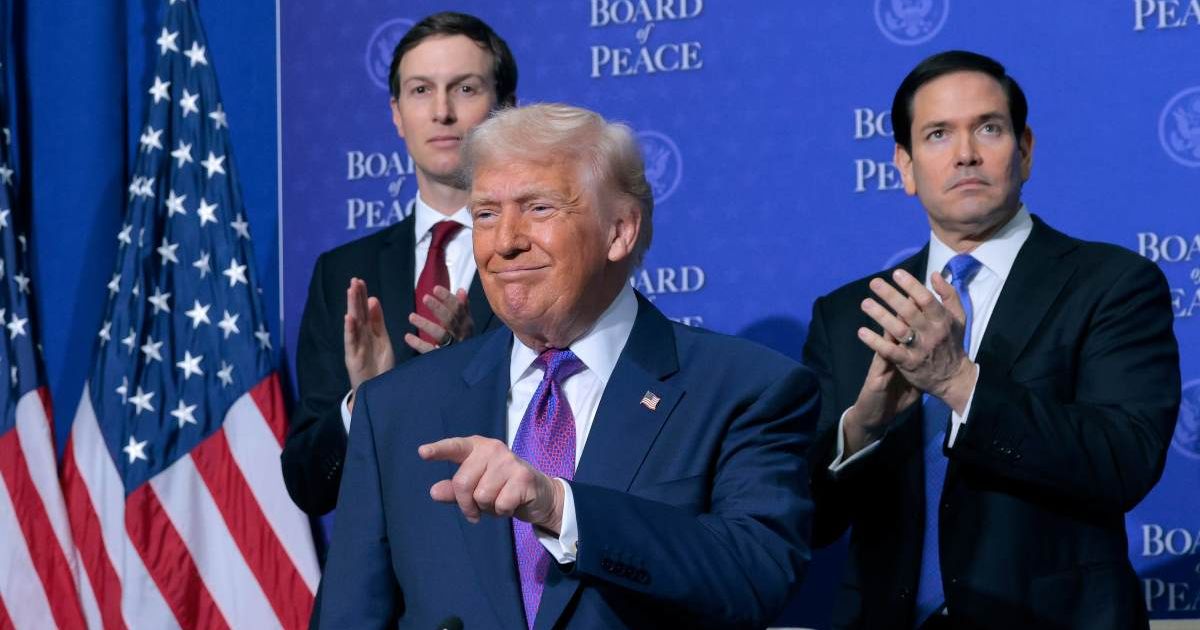
Announced in September last year and inaugurated at the World Economic Forum in Davos, Switzerland, in January, President Donald Trump touted his 'Board of Peace' as "one of the most important and consequential things" that he would be involved in. "I believe that it is the most consequential board, certainly, in terms of power and in terms of prestige. There has never been anything close because these are the greatest world leaders. Almost everybody has accepted. And the ones that haven't will," Trump had said at the Board's inaugural meeting in February.
However, despite the many monetary pledges made by the participating nations, zero transfers have reportedly been made to the Board of Peace yet. In an exclusive report, the U.K.-based Financial Times claimed that of the $7 billion that had been pledged by the Board's members to fund reconstruction in Gaza, not a single dollar has been deposited. "Zero dollars have been deposited," the publication quoted an individual familiar with the official fund set up by the World Bank as saying.
This morning, President Trump unveiled his historic Board of Peace.
— Department of State (@StateDept) January 23, 2026
The leaders of the world are now in a position to enact incredible change for the Middle East. All of this was possible only because of the vision and the drive of the President of the United States. pic.twitter.com/KCUm8BE8CZ
As per the Financial Times report, the Board of Peace has diverted incoming donations directly into a private bank account in JP Morgan, instead of utilising the World Bank mechanism endorsed by the United Nations (UN). A Board of Peace official was quoted by the publication as saying that "a number of options were established to receive funding" and "at this point, contributors have opted to use other options." Apart from Trump's $10 billion pledge, the UAE has contributed $100 million for a new Gaza police force, and Morocco contributed roughly $20 million to cover salaries for a Palestinian technocratic committee. Additionally, Kazakhstan, Azerbaijan, Bahrain, Qatar, Saudi Arabia, Uzbekistan, and Kuwait, along with the UAE and Morocco, have pledged a combined $7 billion to a Gaza relief package.
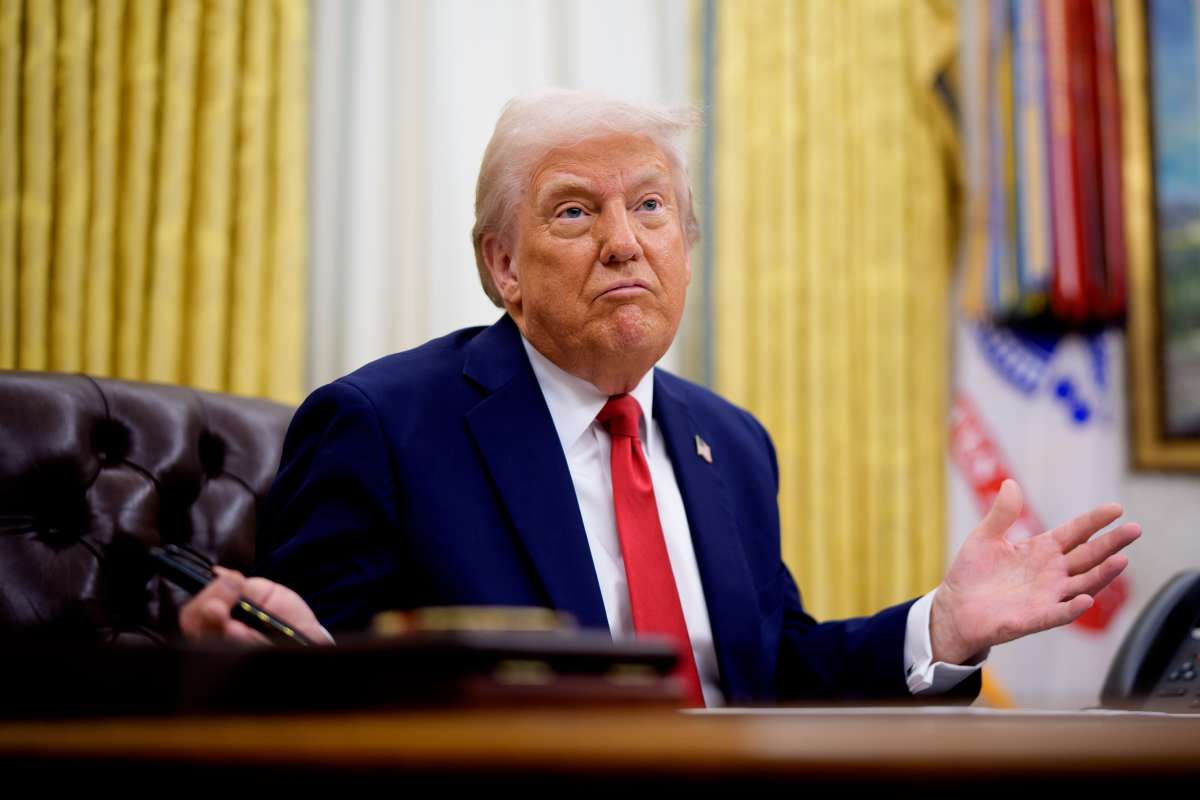
However, FT reported that the funds remain frozen, with none of the proposed programs having started yet. No contracts have been awarded for the reconstruction of Gaza, nor has the U.S. State Department moved ahead with its propsed $1.2 billion of aid spending for projects. One of the primary reasons for this stalling is the continued presence of the Hamas militant group in Gaza.
The Board of Peace, however, called out the Financial Times over its report, claiming that the "article tries desperately to sow doubt about the commitment of the US and partners to the Board of Peace." "They do, however, acknowledge that BoP is being funded through other mechanisms. In typical form, they included this in the top of the story but then proceeded with the narrative they wanted to push all along," the Board posted in its official X account.
This FT article tries desperately to sow doubt about the commitment of the US and partners to the Board of Peace. They cite just one of many funding mechanisms that to date has not been utilized by the donor community. They do, however, acknowledge that BoP is being funded… https://t.co/7wV69oVNGF
— Board of Peace (@BoardOfPeace) May 27, 2026
As per the White House, the Board of Peace originated as a mechanism to manage the reconstruction of Gaza following a ceasefire between Israel and Hamas. The Boards' existence was officially ratified by 19 member nations on the sidelines of the World Economic Forum in January. Since then, more countries have agreed to join the Board, bringing its total strength to at least 27. Apart from the United States, the other countries include Albania, Argentina, Armenia, Azerbaijan, Bahrain, Belarus, Bulgaria, Cambodia, Egypt, El Salvador, Hungary, Indonesia, Israel, Jordan, Kazakhstan, Kosovo, Kuwait, Mongolia, Morocco, Pakistan, Paraguay, Qatar, Saudi Arabia, Turkey, the United Arab Emirates, and Uzbekistan.