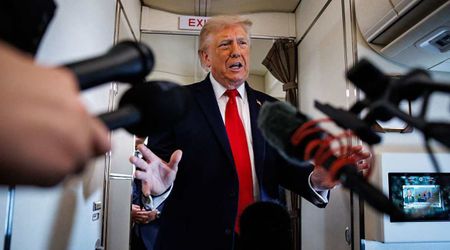
Trump and Xi tackle trade, Iran, and the 'Thucydides Trap'
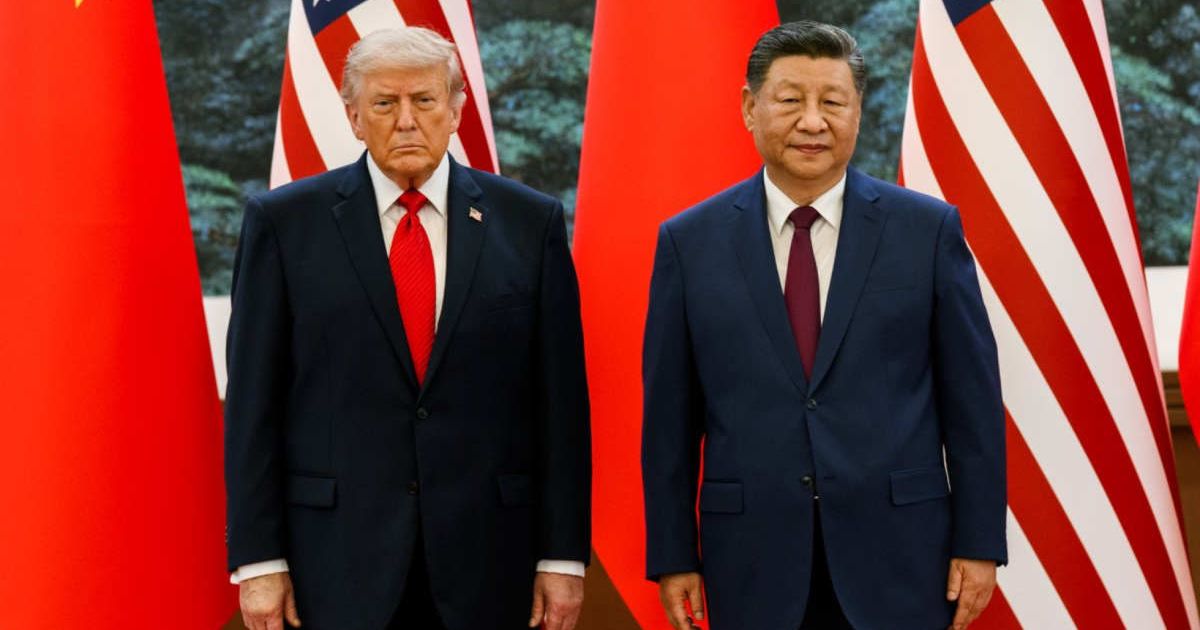
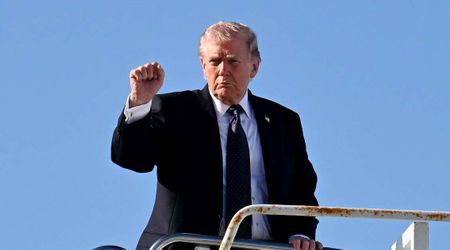
President Donald Trump and his Chinese counterpart, Xi Jinping, discussed a host of differences and opportunities during Trump's visit to the Chinese capital of Beijing, including ongoing trade tensions, the Hormuz blockade, and policies on Taiwan.
During their interaction, President Trump praised Xi, calling him "a great leader" and "friend," adding that relations between Washington and Beijing would become "better than ever before." Xi, meanwhile, reportedly adopted a more cautious approach.
Chinese students greet President Trump with a flag-waving ceremony upon his arrival in Beijing.
— Rapid Response 47 (@RapidResponse47) May 13, 2026
🎥: @MargoMartin47 pic.twitter.com/U8mQrXTiiS
The Chinese President asked whether China and the United States could "transcend the Thucydides Trap and forge a new model for relations between major powers," the Associated Press reported. The Thucydides trap, which borrows its name from an Athenian general who wrote the history of the 5th-century BCE Peloponnesian War, warns against imminent war caused when a rising power begins to challenge the dominance of an established one.
As per reports in Chinese media, Xi warned Trump that mishandling the Taiwan issue could lead to "clashes and even conflicts" between the two countries. Chinese Foreign Ministry spokesperson Mao Ning said on X that the Chinese President told Trump that Taiwan was "the most important issue in China-U.S. relations."
President Xi stressed to President Trump that the Taiwan question is the most important issue in China-U.S. relations. If it is handled properly, the bilateral relationship will enjoy overall stability. Otherwise, the two countries will have clashes and even conflicts, putting… pic.twitter.com/gqji6lEfL7
— Mao Ning 毛宁 (@SpoxCHN_MaoNing) May 14, 2026
While China does not recognize Taiwan's sovereignty, claiming it as a part of its own territory, and in recent years, has increased military activities around the Taiwan Strait, Washington has found a loyal ally in Taipei. In recent months, an $11 billion weapons package approved by the Trump administration has caused some friction between the world's two leading economies.
Secretary of State Marco Rubio, who accompanied Trump in his visit to China, meanwhile, reiterated that Washington's Taiwan policy remained unchanged. "US policy on the issue of Taiwan is unchanged as of today and as of the meeting that we had here today. It was raised. They always raise it on their side. We always make clear our position, and we move on to the other topics," Rubio told NBC News.
Both countries agreed that Iran can never have a nuclear weapon. pic.twitter.com/7hYMIBoTZY
— The White House (@WhiteHouse) May 14, 2026
The two sides also discussed the ongoing Iran war and its impact on global energy markets. The current blockade of the Strait of Hormuz enforced by Iran has pushed oil prices significantly and threatens a global energy crisis if an agreement between Tehran and Washington is not reached soon. According to a Reuters report, Trump pressed China to use its influence over Tehran to help prevent further disruption in the Strait.
The White House said both countries agreed that the Strait of Hormuz should remain open, though no breakthrough on Iran has been announced yet. It is also unclear if China would aid in reopening the Strait.
From the Bilateral Meeting in Beijing:
— The White House (@WhiteHouse) May 14, 2026
President Trump had a good meeting with President Xi of China. pic.twitter.com/WaH8hR1ZV3
In terms of trade and economic cooperation, the White House said both leaders explored ways to expand market access. Discussions were made on increasing American firms in China and bringing in more Chinese investment into U.S. industries. China also reportedly signalled interest in purchasing more U.S. oil and potentially increasing orders for American-made aircraft.