'Their economy is in freefall': Trump claims Iran has no choice but to make a deal with US
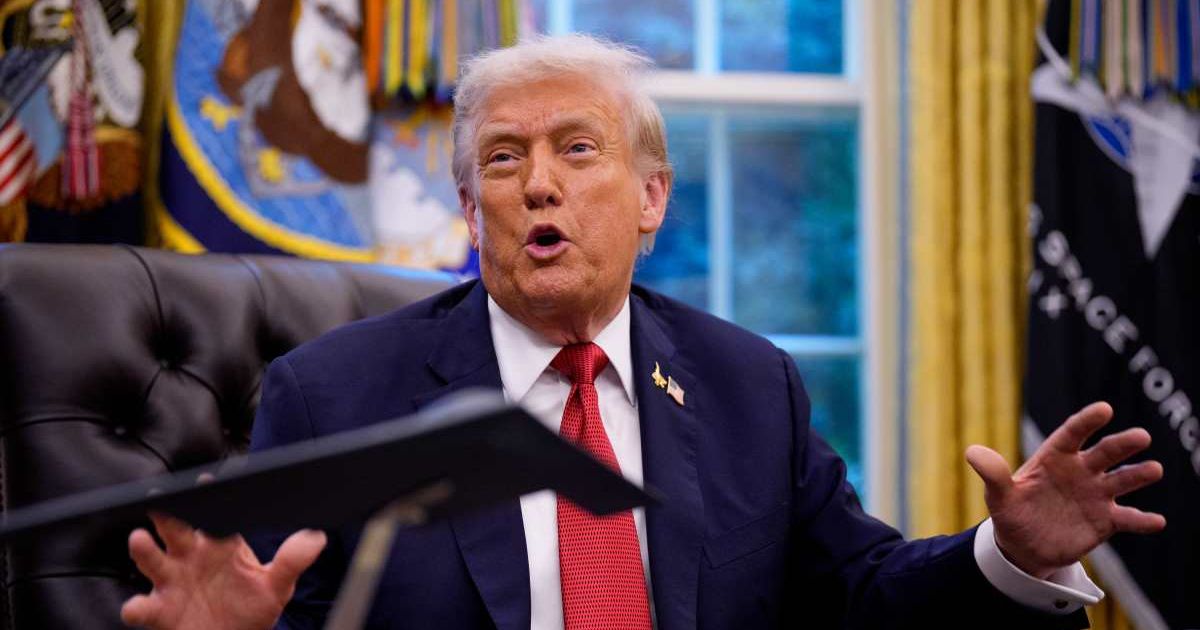
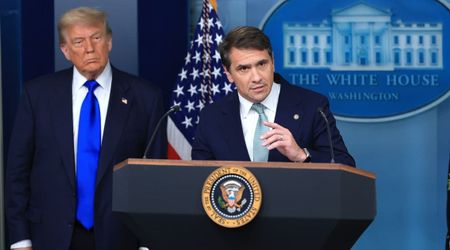
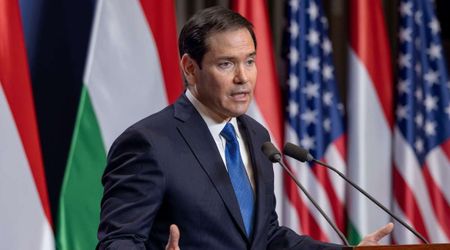
While the conflict in Iran has dragged on for several weeks now, U.S. President Donald Trump indicated on Wednesday that Tehran might be left with no choice but to make a deal with Washington. The President addressed the media alongside Secretary of War Pete Hegseth and Secretary of State Marco Rubio, in which he claimed that Iran's economy was in poor shape, and that he was not worried about the Iran conflict's impact on November's midterm elections.
"I don't think they (Iran) have a choice," Trump said, adding, "They are just going back to the internet because they are getting clobbered. Their economy is in freefall. They have 250% inflation. Their money has no value. Their whole economic system is broken down." Trump also claimed that the Iranian leadership had planned to "outwait" him, hoping for an unfavorable result for the Republicans in November's Midterm elections, which may significantly limit the President's power in such matters.
President Trump on Iran's proposals for a deal: "We're not satisfied with it…Maybe we have to go back and finish it." pic.twitter.com/yxKW6wS5R2
— CSPAN (@cspan) May 27, 2026
"I don't care about the Midterms," Trump added. "Iran cannot have a nuclear weapon. I am doing that for the world. I am not doing it just for us." Earlier in the press briefing, the President claimed that Iran's navy and air force were defeated, and that Tehran was "negotiating on fumes." While preventing Iran from having a nuclear weapon was one of the key agendas of the U.S, opening the Strait of Hormuz has now become just as important.
The Strait was open before the war, but since the U.S. attacks, Tehran has limited access through the waters, and even Washington has put its own blockade in place in the region. As a result, oil and energy prices around the world have skyrocketed. When asked about the future of the region, Trump claimed that while no country would control the Strait, the U.S. would watch over it.
Q: "Would you accept a short-term deal that allow Iran and Oman to control the Strait [of Hormuz]?"
— CSPAN (@cspan) May 27, 2026
President Trump: "The Strait's going to be open to everybody."
Q: "Who would control it?"
Trump: "We'll watch over it…Nobody's going to control it." pic.twitter.com/iKtkeQMe7g
The President was also asked by a reporter if Washington was considering easing sanctions on Iran so that the country could sell its crude to global markets. "No, we are not talking about any easing of sanctions," he said. "We have control of money that they claim is theirs. We'll keep control of that money. When they behave properly and when they do what's right, we'll let them have their money, but right now, we are not doing that."
Q: "Is the U.S. considering easing sanctions on Iran?"
— CSPAN (@cspan) May 27, 2026
President Trump: "No…We have control of money that they claim is theirs. We'll keep control of that money. When they behave properly and when they do what's right, we'll let them have their money." pic.twitter.com/UcgD6MyuUN
Another factor that could decide the future of the Iran war is the Abraham Accords. According to Reuters, Trump has asked several countries, including Saudi Arabia, Qatar, Pakistan, Turkey, Egypt, and Jordan, to join the Abraham Accords. Speaking to the media, the U.S. President expressed doubt over cutting a deal with Iran if countries do not sign the Accords. Pakistan has already publicly rejected Washington's request.
President Trump on Iran: "I'm not sure we should make the deal…If they don't sign to join the Abraham Accords." pic.twitter.com/46lcHRD8dr
— CSPAN (@cspan) May 27, 2026
When asked if a deal was contingent on other countries signing the Accords, the President did not give much away. "I can say that we can make a good deal right now, but maybe not a great deal. If it is not a great deal, we are not making it," he said.