'Nothing short of a surrender': Adam Kinzinger slams Trump's MoU with Iran
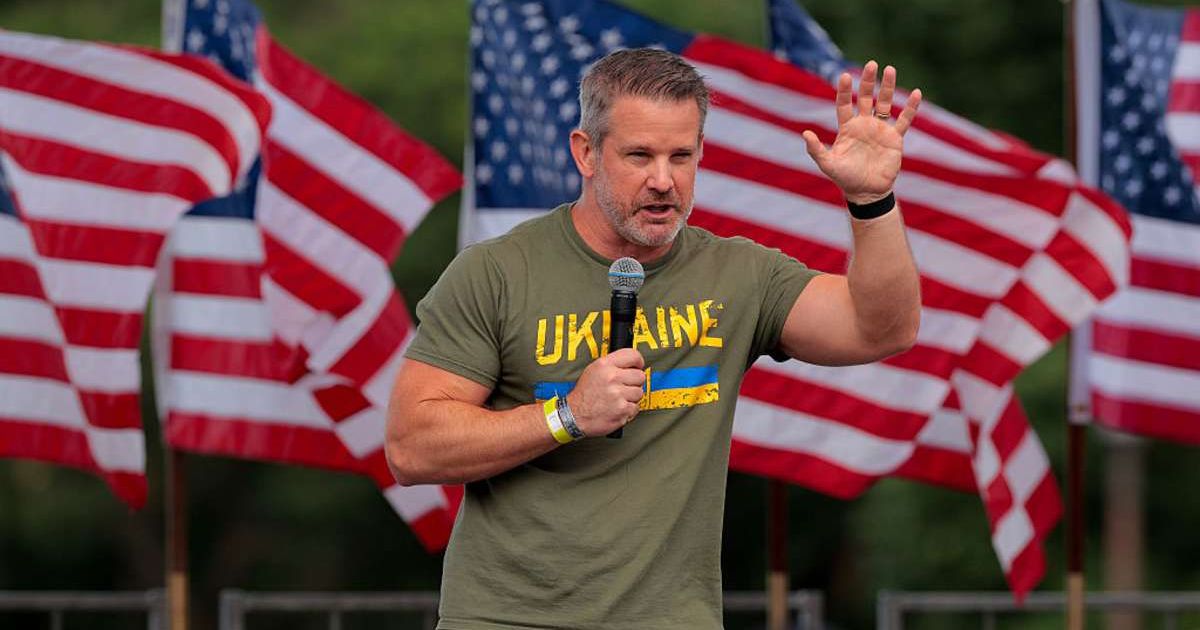
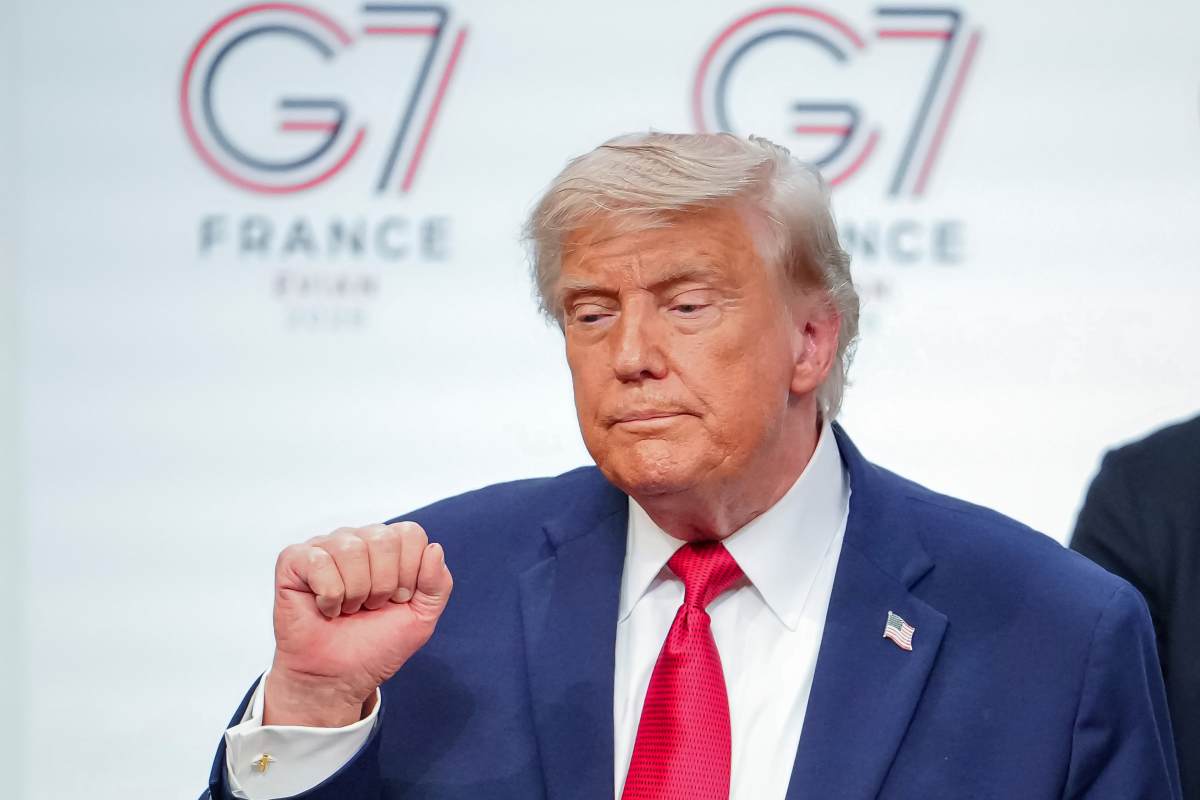
A US-Iran agreement to extend the ceasefire and effectively end the war has been signed, and the officials have released a 14-point Memorandum of Understanding outlining the framework. While President Donald Trump fiercely defended the interim deal while attending the G7 summit in Evian-les-Bains in France, it has drawn bipartisan backlash at home. Former Republican Congressman, Adam Kinzinger, called the MoU "nothing short of a surrender," labeling Trump's military operation an "Epic Failure."
Under the 14-point MoU signed on Wednesday, the U.S. and Iran committed to an "immediate and permanent end to military operations on all fronts," including in Lebanon and the reopening of the Strait of Hormuz, the crucial shipping lane for oil and natural gas, which had been partially shut since the war started in late February, per CNN. Tehran also agreed not to "procure or develop nuclear weapons," while Washington pledged to "develop a definitive, mutually agreed plan" to provide $300 billion in funds for the reconstruction and development of Iran, a concession that is highly unpopular amongst Americans.
"The MOU with Iran is nothing short of a complete surrender. Regardless of whether you support the war or not, there is no reason to have given Iran everything it wanted, to get NOTHING but 60 more days to talk," Kinzinger wrote on X, reacting to the deal. "I'm sorry, America, because this is an EPIC FAILURE."
The MOU with Iran is nothing short of a complete surrender. Regardless of whether you support the war or not, there is not reason to have given Iran everything it wanted, to get NOTHING but 60 more days to talk. I’m sorry America, because this is an EPIC FAILURE. pic.twitter.com/xedmFZCnXy
— Adam Kinzinger (Slava Ukraini) 🇺🇸🇺🇦 (@AdamKinzinger) June 17, 2026
Following the signing of the deal, Iran’s chief negotiator, Mohammad Bagher Ghalibaf, said, “The agreement is a record of U.S. failure. People will see it and judge,” as per the publication. Even Republican Senator Bill Cassidy, a rare critic of Trump within his party who recently lost a primary bid for a third term in office, criticized the MoU as "the worst foreign policy blunder in decades." "Reagan is rolling over in his grave," Cassidy added in a post on X, referring to former U.S. President Ronald Reagan, who is widely considered a hard-line and iconic figure within the conservative movement.
Trump's plan also drew unfavourable comparisons with the more detailed 2015 nuclear deal that was signed under former President Barack Obama's administration. Trump pulled out of the agreement during his first term in 2018. Senator Ted Cruz of Texas, who defended the MoU from the comparisons, also expressed concern about providing funds to Iran. "I do want to urge the president not to give up the victory; we have destroyed their military, and we should not fund the rebuild," Cruz wrote on X.
Reagan is rolling over in his grave. Iran’s nuclear ambitions were not curbed, and they have learned that threatening the Strait of Hormuz works and will undoubtedly leverage it in the future. Now, Iran gets to build brand-new infrastructure under this deal.
— U.S. Senator Bill Cassidy, M.D. (@SenBillCassidy) June 17, 2026
Before the war, the…
While the administration has described the agreement as "performance-based," with Iran benefitting only if it complies with its commitments, critics argue that it hands the advantage to Tehran. Furthermore, several stipulations are unclear and open-ended, according to the BBC. While Iran has agreed to never possess a nuclear weapon, the mechanism to deal with its enriched uranium is yet to be "mutually agreed upon" in subsequent talks, according to the document. However, it has been agreed that at a minimum, it will be "downblended" in place under the supervision of the International Atomic Energy Agency, or IAEA. Defending the deal, Trump said that an "alternative would be a worldwide depression," arguing that if the agreement hadn't been signed, "the strait [of Hormuz] would never have been opened."