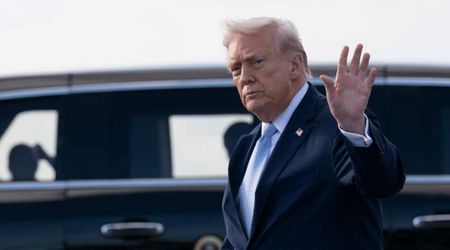
Iran peace talks off to rocky start as Trump's threats trigger walkout by Iranian negotiators
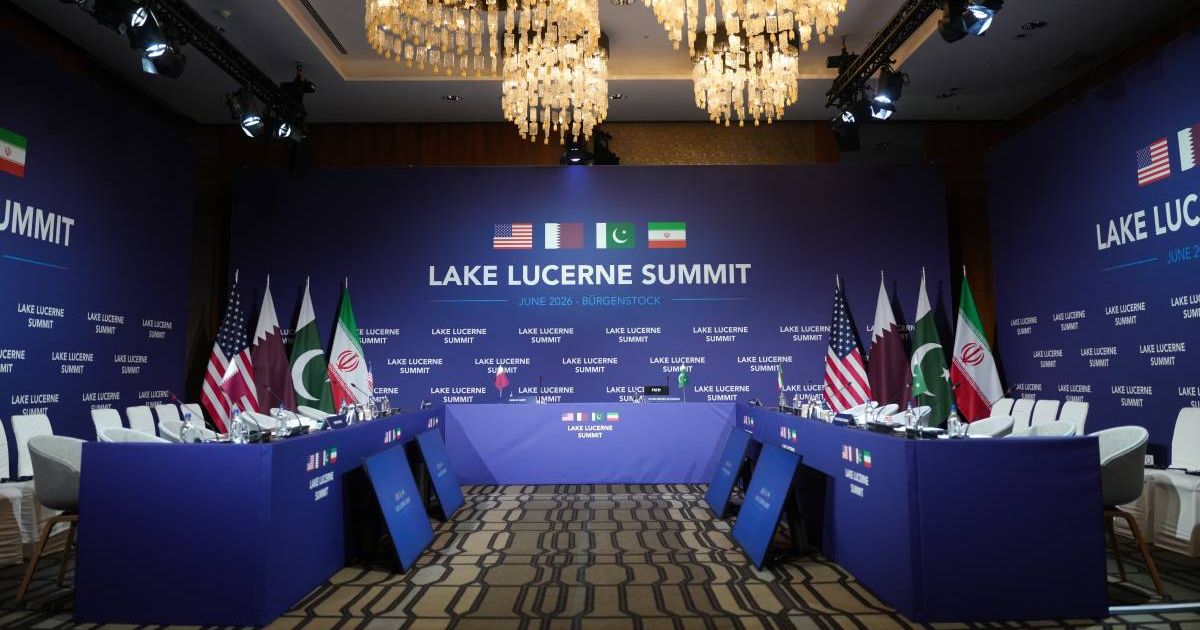
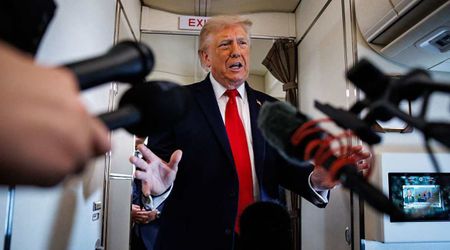
A series of high-level talks between the United States and Iran got off to a rocky start in Switzerland on Sunday, as negotiators from both sides gathered to flesh out the interim agreement signed last week. The process nearly unravelled before it began—Iran's delegation walked out of the negotiating site in protest after President Donald Trump took to Truth Social to threaten Tehran over its support for proxies in Lebanon. The walkout did not derail the talks entirely, and negotiations resumed and ran late into Monday morning.
Spot on, Mr. President.
— Lindsey Graham (@LindseyGrahamSC) June 21, 2026
To say nothing has changed after Operations Midnight Hammer and Epic Fury is an insult to our men and women in uniform.
To say nothing has changed denies the devastation to the Iranian economy created by the blockade and other economic pressures… pic.twitter.com/A4mNRg4oN2
Trump did not stop there, warning that "if they don't, we'll hit Iran very hard again, just like we did last week, only harder." Iran's parliamentary speaker, Mohammad Bagher Qalibaf, hit back swiftly. "They would do better to be careful about their statements," he said. "Our armed forces are prepared to respond in kind. They may keep talking; it is we who act." The walkout may have amounted to merely a brief interruption, but it signals just how fragile the negotiating environment remains even after both sides agreed to come to the table.
🚨 Trump is throwing a major wrench in the talks in Switzerland as they begin.
— MeidasTouch (@MeidasTouch) June 21, 2026
While Vance, Kushner, and Witkoff meet with Iranian officials, Trump posts that Iran must “immediately stop their highly paid PROXIES in Lebanon from causing trouble” — or he’ll “hit Iran very hard… pic.twitter.com/gg94ExzKY3
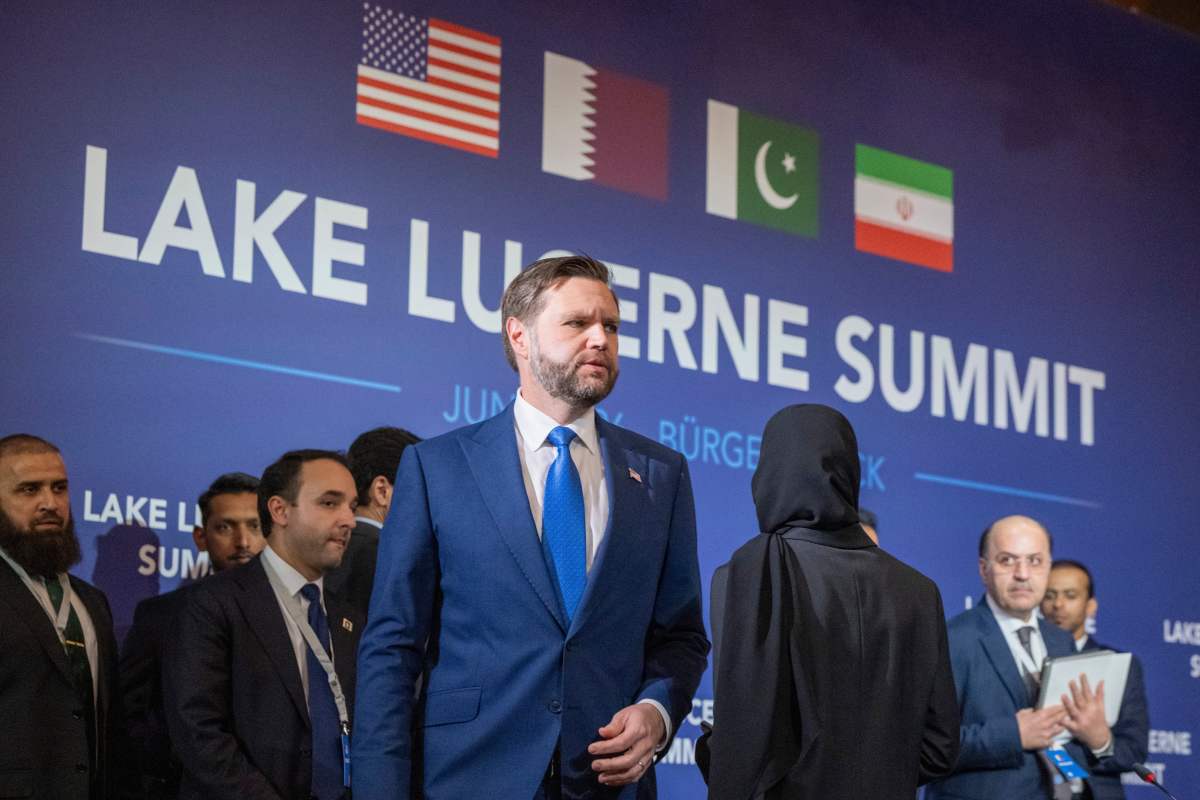
Many observers questioned the wisdom of issuing public threats on social media while American negotiators were in the middle of negotiations. Vice President J.D. Vance pushed back, making clear the administration would not temper its tone in the face of what he characterised as Iranian "trash talk" at the negotiating table. "There was a little bit of threatening, there was a little bit of whining," Vance told reporters. "But at the end of the day, the talks continued, and we made great progress."
The walkout was not the only complication. Iran closed the Strait of Hormuz again on Saturday, citing ceasefire violations by Israel in Lebanon—a move the U.S. military swiftly pushed back on, insisting that traffic through the strait was flowing normally under American monitoring. By the time talks concluded, both sides appeared to align on at least one point: the strait was open, and commercial shipping was moving without incident.
JD Vance on Iran:
— Clash Report (@clashreport) June 22, 2026
What I did find kind of funny is that, after that initial meeting, there was this sort of social media firestorm where everybody said the Iranians are going to leave, and then we proceeded to talk to them for like the next 9 hours.
So, I would just encourage… pic.twitter.com/z8aaznNpUJ
The interim agreement, dubbed the Islamabad Memorandum of Understanding, is only the first step toward resolving the four-month war, triggered by a joint U.S.-Israeli military operation against Iran. The complications reflected how a deal, drawing sharp criticism at home, with opponents arguing the agreement handed Iran significant concessions, faces a long and uncertain road to a final settlement.
Treasury just waived oil sanctions on Iran for 60 days — citing "progress."
— Steve Rattner (@SteveRattner) June 22, 2026
Iran could rake in up to ~$10 billion off that decision alone.
In contrast, the Obama admin didn't lift sanctions until a deal was signed and the IAEA independently verified Iran's nuclear compliance. pic.twitter.com/lhRA7Y0yCc
When talks concluded, Vance declared that the two sides had built a solid foundation toward a final deal. The two sides announced the creation of a mechanism for further discussions. This includes a high-level committee tasked with providing political oversight of the mediation process. Both chief negotiators will report to the committee and lead dedicated working groups covering three key areas: nuclear issues, sanctions, and a monitoring and dispute resolution group charged with ensuring the effective implementation of the memorandum.
Oil falls below $75 for the first time since March as Hormuz traffic begins to recoverhttps://t.co/DhBYkeAAHR
— Karoline Leavitt (@PressSec) June 22, 2026
On the contentious issue of Lebanon, the two sides agreed to establish a de-confliction cell involving both parties and the Lebanese Republic, facilitated by the mediators, to ensure the cessation of military operations. Iranian Foreign Minister Abbas Araghchi framed the stakes plainly, saying the first real test of the negotiations would be whether the new mechanism succeeds in halting the fighting between Israel and Hezbollah.
It should be clear to everybody by now who our friends really are.
— Rick Scott (@SenRickScott) June 22, 2026
Qatar and Pakistan have long histories of harboring terrorists, and right now they seem far more invested in propping up Iran’s decades-long terror campaign than achieving a meaningful peace.
There is still room…
The 63-year-old also confirmed that Iran would be able to resume oil exports following the lifting of the American blockade, with some frozen assets set to be released and a major reconstruction and development plan for Iran in the works—though he offered no further details on the latter. Vance floated the possibility that the U.S. may attach conditions to the unfreezing of Iranian assets, suggesting Tehran could be required to direct those funds toward purchases of American soy, corn, and wheat, with Qatar overseeing the process.
Alhamdulillah, the First High-Level Committee Meeting under the framework of the Islamabad Memorandum of Understanding has concluded successfully in Bürgenstock, Switzerland.
— Shehbaz Sharif (@CMShehbaz) June 22, 2026
The discussions were held in a positive and constructive atmosphere and yielded encouraging progress,… pic.twitter.com/uvA0SBKfvf
The question of Iran's nuclear programme remains unresolved. Trump suggested on Monday that Tehran would need to agree to weapons inspections to ensure what he called "nuclear honesty," but Iran's Foreign Ministry spokesperson Esmaeil Baghaei told the official IRNA news agency that nuclear issues had not yet been discussed and that no new commitments had been made, Reuters reported.
Israel is our democratic ally fighting Hezbollah, Iran’s terrorist proxy with American blood on its hands. President Trump is right: Iran needs to restrain its terrorist proxy, the U.S. should never restrain Israel from defending itself. And if Iran won’t act, we should back… https://t.co/TddG5wPay9
— Tom Cotton (@SenTomCotton) June 21, 2026
Iran had restricted access to International Atomic Energy Agency inspectors and suspended them entirely when the war broke out, the report added. These inspections were part of the Obama-era Joint Comprehensive Plan of Action that Trump canceled during his first term. The focus now shifts to technical talks, which are set to continue at the Swiss resort through the week, with Vance having departed Switzerland and left U.S. envoys Jared Kushner and Steve Witkoff to handle the finer details of the negotiations, according to the Associated Press.