Inside the Protecting Our Democracy Act: Raskin’s legislative shield against executive corruption
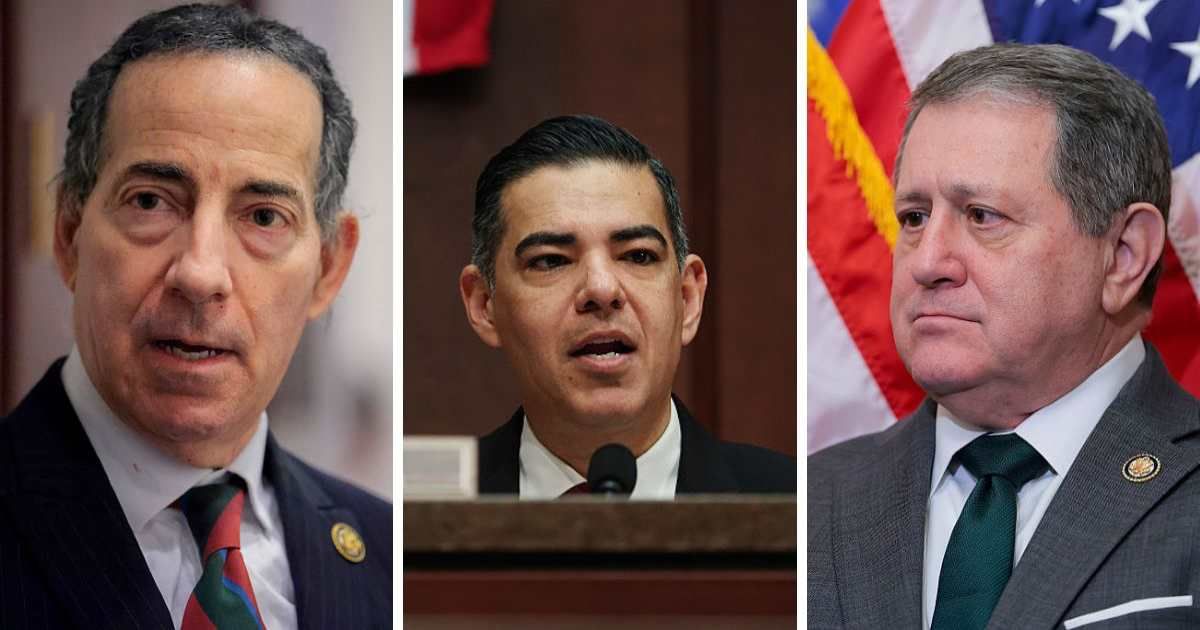
Nearly 70 per cent of Americans think corruption by government officials, such as presidents and members of Congress, is a serious problem. It will soon be very difficult for a president to enrich themselves while in office if the legislation by Rep. Jamie Maskin (D-MD), the ranking Democrat on the House Judiciary Committee, turns into law.
Presidents shouldn't personally profit from their time in office, and until now, presidents have taken the Constitution at its word regarding emoluments.
— Rep. Lizzie Fletcher (@RepFletcher) May 15, 2026
I joined @RepRaskin, @RepRobertGarcia, and @RepJoeMorelle as a co-sponsor of the Protecting Our Democracy Act to further… https://t.co/7fXrl84hRt
The Protecting Our Democracy Act (PODA) aims to "codify constitutional prohibitions on foreign and domestic emoluments to prevent the President from profiting off foreign influence or public office at the expense of the American people", according to a copy.
The initiative, spearheaded by Raskin alongside Representatives Robert Garcia (D-CA) and Joe Morelle (D-NY), seeks to increase transparency in the executive branch's implementation of spending laws and prevent the politicization of the civil service.
President Trump, his family and his closest advisors are violating our Constitution, plundering taxpayer dollars and exploiting our government for personal gain.
— Rep. Jamie Raskin (@RepRaskin) May 14, 2026
Today, @RepRobertGarcia, @RepJoeMorelle and I will introduce the Protecting Our Democracy Act to strengthen our… https://t.co/hhFioTItry
The raft of bills, if passed, will result in a structural overhaul and would tether the presidency to the rule of law. The bill also brings allegations of systemic corruption in President Trump's second term into focus. It can be widely seen as a direct response to these allegations.
Some of the provisions include suspending the statute of limitations for federal offenses committed before or while in office by a sitting president or vice president, strengthening Congress’s control over federal spending and reinforcing the separation of powers, and preventing a president from dismissing a criminal prosecution against them.
President Trump, his family, and this Administration are profiting from pay-to-play schemes, accepting gifts from foreign and domestic actors alike.
— Congressman Robert Garcia (@RepRobertGarcia) May 15, 2026
That's why I joined @RepRaskin and @RepJoeMorelle in introducing the Protecting Our Democracy Act to stop this blatant corruption. pic.twitter.com/WH848VzSJx
One of the key provisions requires "political campaigns, parties, and political committees to report attempts by foreign governments, foreign political parties, and their agents to influence American elections to the Federal Election Commission (FEC) and Federal Bureau of Investigation (FBI). It also seeks to eliminate the said interference via enhanced criminal penalties for violations.
Raskin also pointed out that the norm of limited contact between the White House and the Justice Department (DOJ) to limit political interference has not been followed in recent years. A provision in the bill ensures that these norms are followed by requiring the Attorney General to maintain a log of designated contacts between the White House and DOJ to be shared with the DOJ Inspector General (IG) on a semi-annual basis.
Private detention centers that donate to Donald Trump's campaign and contract with ICE will now *run* ICE. Plain AND simple. David Venturella’s appointment ensures Trump’s corporate bosses continue to profit from our communities’ pain.
— Congresswoman Delia C. Ramirez (@repdeliaramirez) May 15, 2026
Corruption is how authoritarians reward… https://t.co/a5yxLCM57I
Furthermore, there are measures to ensure whistleblowers are protected from retaliation for exposing wrongdoing, require presidential candidates to submit their tax returns, and increase disclosure requirements for online political advertisements. For more accountability in the process of filling vacant positions, the Act calls for the selection of qualified acting officials, and seeks to incentivize the President to nominate officials for vacancies more rapidly.
An insane level of corruption—even for Trump.
— Elizabeth Warren (@SenWarren) May 15, 2026
A $1.7 BILLION slush fund for Trump’s hand-picked stooges to hand money to January 6th insurrectionists and his political allies.
Here’s the President’s priority as Americans sell their plasma to afford gas and groceries: https://t.co/wahV5OPEAj
The bill is unlikely to pass as Democrats are in the minority in both chambers of Congress. This limits their ability to turn draft legislation into law. The circumstances may change, however, if they wrest control during midterms in November this year. The rampant corruption is, in fact, one of the key planks of their election messaging.
Donald Trump knows he controls DOJ and has Congressional Republicans wrapped around his finger. So now the depths of his corruption know no bounds. @SpeakerJohnson and my Republican colleagues: silence is complicity.
— Daniel Goldman (@danielsgoldman) May 15, 2026
When we take back the House, I will ensure every crook… pic.twitter.com/XdlnLul5BT
Another section prohibits the President from accepting, including through a business owned by him, payments from pardon recipients or presidential appointees to prevent corrupt “pay-to-play" schemes. The bill is co-sponsored by 98 members of Congress, which include Yassamin Ansari (D-AZ), Jasmine Crockett (D-TX), and Mike Levin (D-CA), among others. Sen. Adam Schiff (D-CA) will introduce the companion bill in the Senate.
Democrats have ramped up the pressure on the Trump administration with a series of measures aimed at curbing corruption. Sen. Peter Welch and Rep. Dave Min announced recently that they will be investigating 17 of Trump's pardons. They constituted an anti-corruption task force last month to “overhaul ethics rules and protect access to the ballot.”