Federal court strikes down Trump's $100,000 H-1B visa fee as 'unlawful tax'
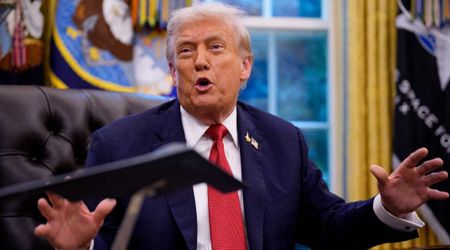
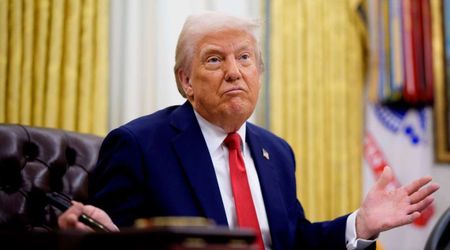
The Trump administration suffered another legal setback after a federal court struck down its $100,000 fee on new H-1B visas for highly skilled foreign workers, ruling it an "unlawful tax," lacking Congress's authorization, Reuters reported. The blow comes days after a federal judge in Massachusetts also granted a preliminary injunction blocking the administration's plan to impose ideological conditions on Supplemental Nutrition Assistance Program (SNAP) funding.
Some news for providers and patients across America: A federal judge has struck down the Administration's new $100,000 H-1B visa fee. I have been working to exempt healthcare workers from this fee that only exacerbates the current staffing shortages in healthcare. That's why I…
— Congressman Mike Lawler (@RepMikeLawler) June 8, 2026
The lawsuit, as in the SNAP case, was brought by a coalition of 20 Democratic states challenging a fee announced in September as part of Trump's immigration agenda. In the executive order imposing the penalty, Trump claimed the H-1B programme had been "deliberately exploited to replace American workers with lower-paid, lower-skilled labour," arguing that the displacement of American workers posed a threat to economic and national security.
Today’s decision from a U.S. District Judge to vacate the policy implementing the Presidential Proclamation mandating a $100,000 fee for H-1B visa applicants—a 5,000% increase in some cases—came at a critical time for Alaska’s schools that are in the midst of hiring before next…
— Sen. Lisa Murkowski (@lisamurkowski) June 8, 2026
The ruling by U.S. District Judge Leo Sorokin dealt a significant blow to Trump's immigration agenda, offering relief to the tech industry, healthcare sector, and universities that depend on skilled foreign workers. It also handed a win to the 20 Democratic states, which argued the fee would effectively price out government and nonprofit employers from the programme, threatening shortages of teachers, medical professionals, and academic researchers.
Another activist judge (appointed by Obama) just sided against President Trump and his efforts to crack down on the absurdity that is the H-1B program.
— Rep. Chip Roy Press Office (@RepChipRoy) June 8, 2026
Rep. Roy just introduced the American White-Collar Worker Jobs Act to END H-1B abuse and protect AMERICAN tech workers.…
In the suit, the states, which included New York, California, Illinois, among others, contended the policy violated the Administrative Procedure Act, enacted by Congress as a check upon "administrative zeal." It slammed the policy as "arbitrary" and "capricious" and reflected "policy goals of the president that were so fleeting that he no longer appears to maintain them." It concluded that H-1B fees must be set by Congress or the Department of Homeland Security (DHS) following a proper rulemaking process.
🚨 Breaking: U.S. District Judge Leo Sorokin of Boston has struck down the $100,000 H-1B fee.
— U.S. Tech Workers (@USTechWorkers) June 8, 2026
Had the administration been serious about preventing outsourcing firms from accessing H-1B visas, it could have pursued reforms through the regulatory process that were more likely to… pic.twitter.com/UJy0846agg
"H-1B visas allow talented doctors, nurses, teachers, and other workers to serve communities in need across our country," New York Attorney General Letitia James explained. She added that Trump's attempt to ruin the program adversely affected states' access to health care, disrupted their educational services, and hurt the state economy. The shortage of workers would be particularly devastating for "rural and underserved communities."
The H1B program is rife with fraud. How many Americans have been hurt by this farce? https://t.co/TbeDbX9Uld
— Ron DeSantis (@RonDeSantis) June 7, 2026
"The federal government can’t arbitrarily turn these visas into an extortion racket to punish employers and institutions the President does not like," Washington State Attorney General Nick Brown had said in a statement. He had explained that employers paid between $960 to $7,595 in regulatory and statutory fees for H-1B visas before Trump imposed his supplemental fee. Congress capped H-1B visa approvals for employers at 65,000 per year, with another 20,000 for holders of advanced degrees approved for three to six years.