Decoding $1.7 billion slush fund: How Trump’s IRS lawsuit will result in windfall for his allies
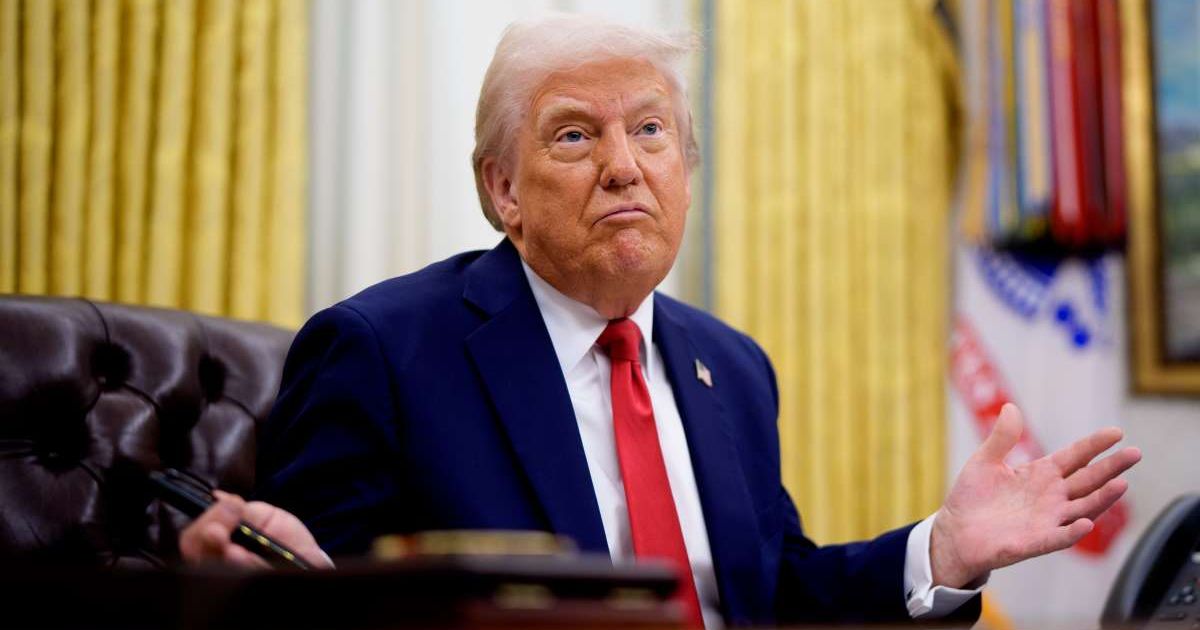
The federal government's plan to settle President Trump’s $10 billion lawsuit against the Internal Revenue Service (IRS) through a $1.7 billion “political slush fund” has sparked fierce backlash from Democrats and critics alike. But what exactly is this plan? And why has it got everyone so incensed?
First, a primer: the slush fund arises out of a deal in which Trump will agree to drop his lawsuit against his own government in exchange for a $1.7 billion reserve fund, which will be used to indemnify people, including his allies, who were the targets of a Department of Justice (DOJ) investigation during Biden's presidency.
Trump tried to sue his own IRS for $10 billion… and is using it to demand a $1.7 billion slush fund to pay Jan. 6 rioters.
— Mark Warner (@MarkWarner) May 15, 2026
The plan has naturally run into trouble. The fund, if approved, will be paid for by taxpayers. Another reason is Trump's 'junk' lawsuit itself. His claims stem from the leak of his tax returns during the first term of his presidency, investigations into his handling of classified documents after leaving office, and the alleged collusion with Russia for the 2016 campaign.
The plan's timing is questionable as the court is reportedly planning to dismiss his suit because it is likely to be plagued by a conflict of interest, according to The New York Times. There is no timeline yet for the plan's approval, and it is also unclear where the money will come from, the report continued.
Donald Trump is about to turn Jan 6 criminals into MILLIONAIRES.
— Miles Taylor (@MilesTaylorUSA) May 15, 2026
With your tax dollars.
The people who smeared feces on the Capitol walls…
…hunted Mike Pence through the halls of Congress…
…assaulted cops.
He’s creating a $1.7 billion apology fund for them.
Disgusting.
Why is this important: Many congressmembers argue that this is an unprecedented arrangement being sanctioned under the disguise of a legal settlement to bypass congressional oversight and weaponize public funds for political allies.
This is, in their eyes, an illegal slush fund which may open the door for the administration to exploit federal settlement channels, circumvent traditional congressional appropriations processes, and financially underwrite allies, which also include January 6 rioters.
If this report is true, this is an outrage.
— Mike Levin (@MikeLevin) May 15, 2026
The Judgment Fund pays court judgments against the United States. It is not Donald Trump’s personal piggy bank. And that is exactly what he is turning it into.
Look at the scheme. Trump sues his own IRS for $10 billion. Trump controls…
The fund offers a way to project victory on a "bogus" lawsuit before it fails in the courts. The arrangement also helps Trump fend off allegations of corruption and conflict of interest, as the money will be diverted towards his allies and not his organizations.
How it started: There were several discussions in the Justice Department on how to settle the lawsuit, CNN reported, adding that they were considering having the IRS drop its plan to audit the president and his family members, as well as audits of the family’s businesses.
The Trump administration Justice Department is working to settle a $10,000,000,000 lawsuit Donald Trump launched against his own administration.
— James E. Clyburn (@RepJamesClyburn) May 13, 2026
The outcome could mean billions in taxpayer money going to Trump or special IRS treatment for Trump, his family, and his businesses.… pic.twitter.com/z4XXtHAdmx
A monetary settlement is also among the options under consideration. The optics of one of the president's government agencies paying the President himself raise ethical concerns, the report explained.
First, Donald Trump sues his own IRS to enrich himself.
— Adam Schiff (@SenAdamSchiff) May 15, 2026
Now he wants to use billions in taxpayer funds to compensate his allies, including thousands charged for the January 6 insurrection.
This is easily the most corrupt regime in U.S. history. https://t.co/lD2ETb8dt3
What is the response: Democrats have categorically come out in strong opposition to the plan, which they say is a clear instance of corruption in "plain sight". Congressman James Walkinshaw (D-VA), a member of the House Committee on Oversight and Government Reform, issued a statement underscoring the lack of "oversight, transparency, and accountability" in the plan.
"Families are stretching every paycheck to keep food on the table, gas in the tank, and a roof over their heads. Meanwhile, President Trump is reaching into those same taxpayers’ pockets to reward his political allies instead of lowering costs or helping working families," he said. "President Trump and his allies are openly stealing from the American people by using the machinery of government to reward political loyalists with taxpayer money."
An insane level of corruption—even for Trump.
— Elizabeth Warren (@SenWarren) May 15, 2026
A $1.7 BILLION slush fund for Trump’s hand-picked stooges to hand money to January 6th insurrectionists and his political allies.
Here’s the President’s priority as Americans sell their plasma to afford gas and groceries: https://t.co/wahV5OPEAj
What is a slush fund: Think of it as a sum of money that is set aside as a reserve. In accounting, it serves as a general ledger account of commingled funds without a designated purpose, whereas in politics, the term often carries a negative connotation, describing capital that has been "raised secretly, perhaps from an illegitimate source, and is intended to be deployed primarily for illegal or unethical purposes".