Breakthrough or brinkmanship? Iran heads to negotiations with US as military tensions surge in Gulf
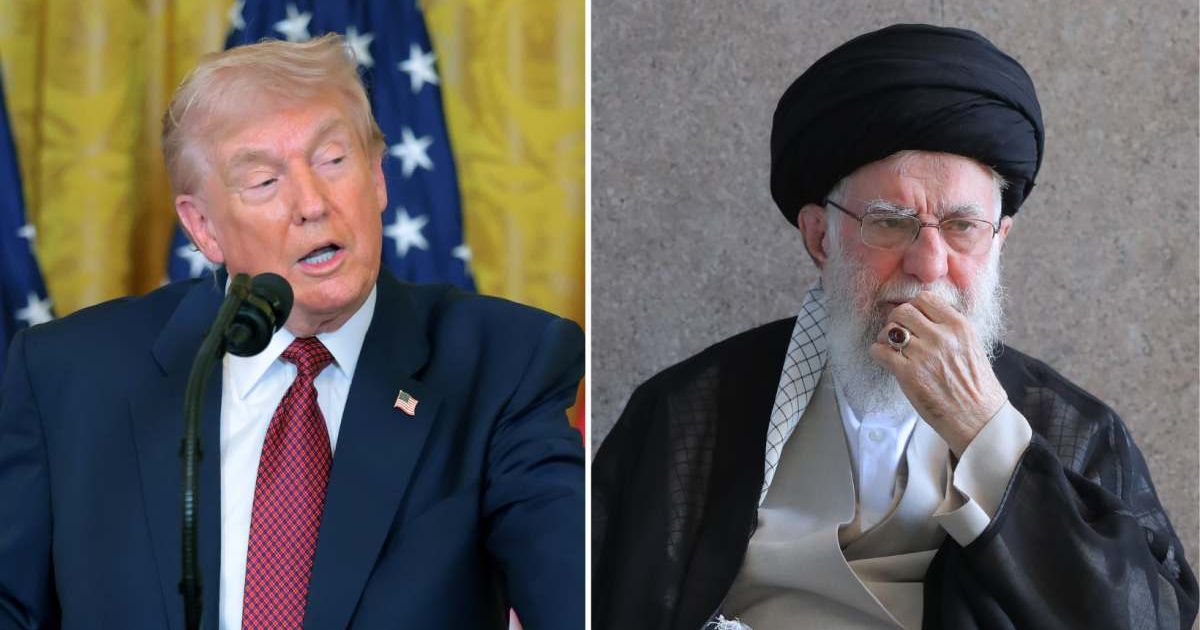
Iranian Foreign Minister Abbas Araghchi arrived in Geneva today, February 16, amid intense international speculation that a breakthrough may be on the horizon for the U.S. and Tehran to resume formal nuclear negotiations. However, scepticism towards such a possibility also remains high.
Told CNN:
— Seyed Abbas Araghchi (@araghchi) February 1, 2026
Iran and the U.S. are at a fateful point in time:
We can achieve a fair and equitable deal to ensure no nuclear weapons. This mutually beneficial outcome is possible even in a short period of time.
On the other hand, there may be miscalculation and even aggression.…
Ahead of the second round of talks with the U.S., Araghchi is meeting Rafael Grossi, Director General of the International Atomic Energy Agency, and was also expected to meet his Omani counterpart, Badr al-Busaidi. Tuesday's meeting between Agrahchi and the U.S delegation, comprising Special Envoy Steve Witkoff and Jared Kushner, comes at a time when both the U.S. and Iran have escalated military activity in the Gulf.
🇮🇷 Iranian state television reports that the Islamic Revolutionary Guard Corps (IRGC) has launched military drills in the Strait of Hormuz titled “Smart Control of the Strait of Hormuz,” under the command of Major General Mohammad Pakpour.
— NSTRIKE (@NSTRIKE1231) February 16, 2026
📺 According to state media, the Corps… pic.twitter.com/gunDYGNvuc
Military tensions at an all-time high
Tensions between the two nations have been at an all-time high since the U.S. downed an Iranian drone that was approaching the aircraft carrier USS Abraham Lincoln in the Arabian Sea on February 4. Additionally, on February 13, President Donald Trump ordered the USS Gerald R. Ford, the world's largest aircraft carrier, to the Middle East to join the USS Abraham Lincoln. Iran, meanwhile, is conducting naval drills at the Strait of Hormuz, one of the world's most sensitive waterways through which approximately 20% of the world's oil flows.
📍 Strait of Hormuz
— Brain Bite (@grokmen321) February 16, 2026
Between Iran 🇮🇷 and Oman 🇴🇲
Connects the Persian Gulf to the Gulf of Oman
🚢 Ships Traffic:
Around 20–30 large oil tankers per day pass through.
🛢️ Oil Transport:
Around 20 million barrels of oil per day pass through
About 20% of global oil supply pic.twitter.com/3yLKvuwzOB
After landing in Geneva on Monday, Araghchi informed in a post on X that he is looking forward to a "fair and equitable deal." "I am in Geneva with real ideas to achieve a fair and equitable deal. What is not on the table: submission before threats," he wrote. The Iranian Foreign Minister also informed that his meeting with Grossi would focus on "deep technical discussion," "ahead of diplomacy with (the) U.S. on Tues."
Joined by nuclear experts, I will meet @rafaelmgrossi on Mon for deep technical discussion. Also meeting @badralbusaidi ahead of diplomacy with U.S. on Tues.
— Seyed Abbas Araghchi (@araghchi) February 16, 2026
I am in Geneva with real ideas to achieve a fair and equitable deal.
What is not on the table: submission before threats
Notably, U.S. Secretary Marco Rubio told Bloomberg in an interview that the U.S. President is open to meeting Iran's Supreme Leader Ayatollah Khomeini to discuss a deal if Iran so desires. However, given recent statements made by Trump, the U.S. is expected to push for regime change—something that Iran is unlikely to cede to. In a recent exchange with reporters, Trump had said that a regime change in the country "would be the best thing that could happen."
.@POTUS on Iran: "They should have made a deal the first time, then they got Midnight Hammer instead … This will be very traumatic for Iran if they don’t make a deal." pic.twitter.com/8zyXaxRD7w
— Department of State (@StateDept) February 12, 2026
Iran-U.S deal: What's on the table?
During Trump's first term as President, the U.S. had unilaterally withdrawn from the Iran Nuclear Deal (formally, the Joint Comprehensive Plan of Action), calling it the "worst deal ever". This was followed by a list of sweeping demands, unveiled by then-Secretary of State Mike Pompeo in 2018. Apart from permanently abandoning its nuclear programme, the U.S. demanded that Iran halt the development and launching of all nuclear-capable missile systems, and end support for Middle East "terrorist groups," specifically the Hezbollah, Hamas, and Palestinian Islamic Jihad. In return, the U.S. had promised to lift all sanctions and normalize relations with Tehran.
Iran will never be allowed to have a nuclear weapon. That's pretty clear.
— Department of State (@StateDept) February 14, 2026
We obviously want to have forces in the region because they've shown in the past that they are willing to attack us.
Beyond that, the president has said his preference is to reach a deal.@SecRubio pic.twitter.com/EIATV53JPu
However, during President Trump's current tenure, a series of military confrontations, coupled with large-scale protests facing brutal government crackdown in Iran, have hardened the U.S.A.'s stance towards reaching an agreement. Trump has, on several occasions, threatened direct military action against Tehran if the Iranian government penalised protestors. Iran will "pay Hell" Trump had said, if they went ahead with mass executions of protestors.
Meanwhile, Israeli Prime Minister Benjamin Netanyahu has made it clear that stopping the enrichment process should not be a good enough reason to stop the deal. Addressing the Conference of Presidents of Major American Jewish Organizations, Netanyahu said, "There shall be no enrichment capability—not stopping the enrichment process, but dismantling the equipment and the infrastructure that allows you to enrich in the first place." The statements came after the Israeli PM met Trump last week to discuss economic strongholds on Iran. As per an Axios report, Netanyahu told Trump it would be impossible to make a good deal, while Trump said, "Let’s give it a shot."
On the other hand, Iranian Deputy Foreign Minister Majid Takht-Ravanchi has signaled over the weekend that Tehran is willing to consider "real compromises", specifically diluting its 440kg stockpile of 60% enriched uranium, if the U.S. agrees to lift financial sanctions. The meeting is taking place even as Iran continues its navy drills, and the USS Gerald R. Ford heads towards the Gulf. The reassignment of the US aircraft carrier, both Trump and Rubio have said, is a last resort if the U.S. fails to strike a deal with Iran.