Americans feel the heat as average gasoline price surges to $4.18, highest in four years
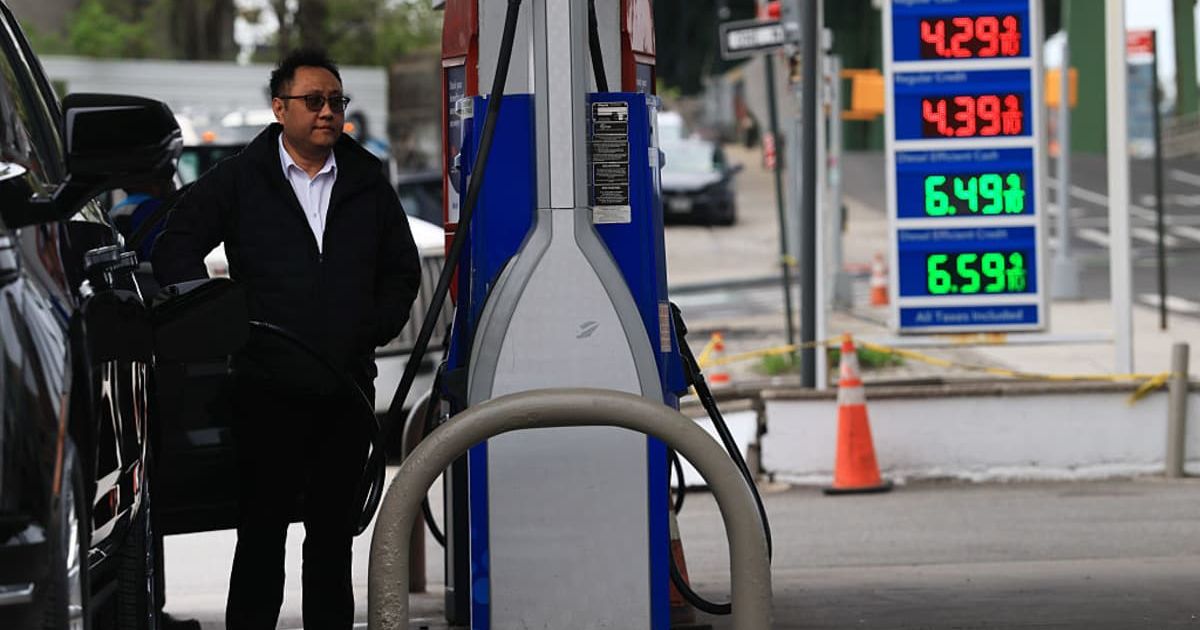
Americans are feeling the pinch of the global energy crisis triggered by the blockade of the Strait of Hormuz, as average gas prices hit $4.18 a gallon—the highest since the start of the war in February this year, according to data from AAA. The United States and Iran appear to be in a stalemate after the collapse of peace talks, raising concerns that the price will not relent anytime soon.
The price spike has been the highest since 2022, when Russia invaded Ukraine, causing Brent crude to surge past $100 a barrel. It is currently trading at $111, up by more than $40 than when the war began two months ago.
It must be noted that the average price of gasoline is different across states, with oil-producing states averaging almost $2 a gallon lower than states that import gas. The cost of gas in California is $5.97 a gallon, while in Oklahoma, it averages at $3.57 a gallon.
The price volatility can be attributed to multiple factors, chief among them is the closure of the Hormuz Strait, which carries almost a fifth of the world's traded oil and gas. There is no clarity on whether Washington and Tehran are close to making any headway in the peace talks. Iran has made it clear that it will not reopen the Strait of Hormuz unless the US lifts its naval blockade and agrees to a long-term truce.
President Donald Trump wants Iran to terminate its nuclear program, whereas Iran has proposed to defer negotiations on its nuclear program to a future date. Trump also wants Iran to address other issues like its missile program and support for regional proxies.
It's day 59 of Trump's war with Iran. Gas prices are 40% higher since the war began.
— Elizabeth Warren (@SenWarren) April 28, 2026
About 60 per cent of Americans have cut back on entertainment like eating out, movies, and concerts to save money, according to a survey by CNBC. Moreover, nearly 40 per cent are spending less on essential items like groceries and medical care, the survey added. In other words, the rising gas prices are expected to make matters worse in the coming days if the Middle East conflict continues.
Global prices might experience some respite in the wake of the UAE's decision to pull out from the Organization of the Petroleum Exporting Countries (OPEC). This may come as a blow to OPEC, but it may allow the UAE to sell more oil to the world, potentially stabilising prices in the process. The country was pumping about 3 million barrels per day as per the stipulated quota. But it has a reported capacity of around 4.8 million barrels per day.